Posts

Duracell, the world’s #1 consumer battery manufacturer, is now part of Augmentir’s Customer Advisory Board, joining Colgate-Palmolive, Sargento, Graphic Packaging, and Hunter Industries.

When it comes to high-performance batteries, there’s one brand that everyone knows and loves – Duracell.

We are excited to announce that the world’s #1 consumer battery manufacturer is now part of Augmentir’s Customer Advisory Board. Duracell’s collaboration and expertise are a major leap forward in our mission to transform industrial work and empower frontline workers worldwide with AI-driven connected worker solutions.

augmentir welcomes duracell to customer advisory board

Duracell’s commitment to innovation and excellence aligns perfectly with our vision of leveraging connected worker and AI technology to augment and transform the industrial workforce. With Duracell on board, we are set to supercharge our innovation and advance our impact on the connected worker market and manufacturing arena.

Our Customer Advisory Board was announced last September and consists of leading manufacturers from a wide range of industries who understand the importance of today’s unique industrial workforce challenges. Duracell joins other leading manufacturers including:

  • Colgate-Palmolive
  • Graphic Packaging International, LLC
  • Hitachi Energy
  • Hunter Industries
  • Sargento

This powerhouse lineup underscores our commitment to addressing the evolving needs of the industrial workforce. With Duracell and our other board members actively helping guide and shape the development of our AI-powered connected worker platform, we’re making sure it meets the industry’s needs head-on.

Collaborating for AI-Driven Connected Worker Innovation

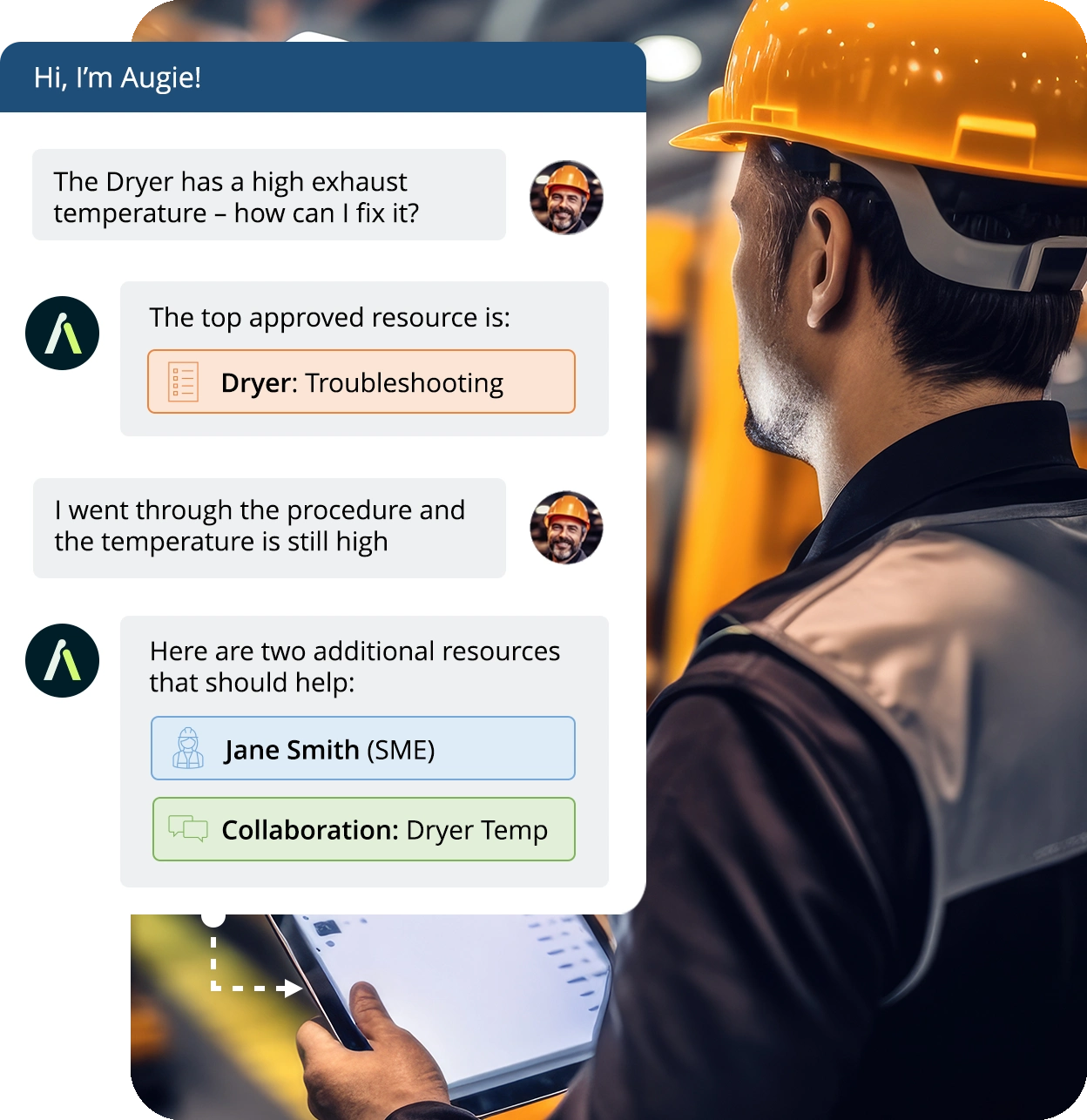
Our AI-driven connected worker platform stands out by providing frontline workers with unparalleled personalized, real-time assistance and insights – enhancing productivity, skills management, workforce development, and operational efficiency. Unlike other platforms, ours was purpose-built to leverage advanced AI to continuously learn and adapt to each worker’s unique needs, offering tailored support and proactive guidance.

Recently, we were named the market-leading solution in the connected frontline workforce application space by LNS Research, highlighting us as the industry’s Most Complete Product. Augmentir was also named 2023’s “Connected Worker Company of the Year” by Frost & Sullivan, as well as named a “Cool Vendor” for Manufacturing Operations by Gartner.

“We are honored to welcome Duracell to our Customer Advisory Board,” said Russ Fadel, CEO of Augmentir. “Their expertise and forward-thinking approach will provide invaluable insights, helping us to continue delivering cutting-edge solutions that drive operational efficiency and workforce productivity.”

Duracell’s participation on the board involves sharing industry best practices gained from their extensive experience in manufacturing and supply chain management. They will provide critical feedback on new features and enhancements, ensuring that our AI-powered platform meets the practical needs of the industrial workforce. Additionally, Duracell will collaborate with us and other board members to develop innovative strategies to address common challenges in the industrial sector, such as improving safety, increasing productivity, and reducing downtime.

This partnership underscores our shared dedication to empowering the workforce of the future by harnessing the power of advanced technologies. With the input of our customer advisory board, we aim to create more intuitive, effective, and user-friendly solutions that help companies optimize their operations and support frontline workers to achieve next-level performance. Together, we are confident that we can drive meaningful change and set new standards for excellence in the industrial world.

Interested in learning more?

If you’d like to learn more about how Augmentir and our AI-powered connected worker solution is transforming industrial frontline work, schedule a demo with one of our product experts.


See Augmentir in Action
Get in Touch for a Personalized Demo

Learn about performance management in manufacturing, best practices and implementation methods, and key examples and use cases.

Manufacturing performance management is the process of setting, monitoring, and optimizing key performance indicators (KPIs) related to workforce performance and production processes in manufacturing environments. It includes real-time monitoring and evaluation of employees’ work, as well as the continuous improvement of operational workflows to ensure optimal efficiency, product quality, and adherence to both safety requirements and organizational goals.

performance management in manufacturing best practices

Through data-driven insights, performance management software, and regular assessments, performance management aims to enhance employee productivity and engagement, reduce downtime, and maintain a competitive edge in the industry. Read our blog post below to learn more about performance management in manufacturing including:

5 Best Practices for Performance Management in Manufacturing

To get the best value from your performance management system here are five best practices for performance management in manufacturing:

1. Clear Goal Alignment:

Organizations must ensure that performance management processes align with overall organizational goals. They must clearly communicate objectives to employees at all levels, linking individual and team performance metrics to broader manufacturing and business objectives. This fosters a sense of purpose in frontline teams, engages workers, and helps employees understand how their efforts contribute to the company’s success.

2. Real-time Monitoring and Data Analytics:

Implement real-time monitoring of production and shop floor processes and equipment performance through the use of AI and connected worker technology. Utilize data analytics and AI-driven processing to gain insights into worker performance trends, identify bottlenecks, and facilitate data-driven decision-making. The ability to monitor operations in real-time not only enables proactive interventions to maintain efficiency, it also ensures fairness, accuracy, and transparency in performance measurement.

Pro Tip

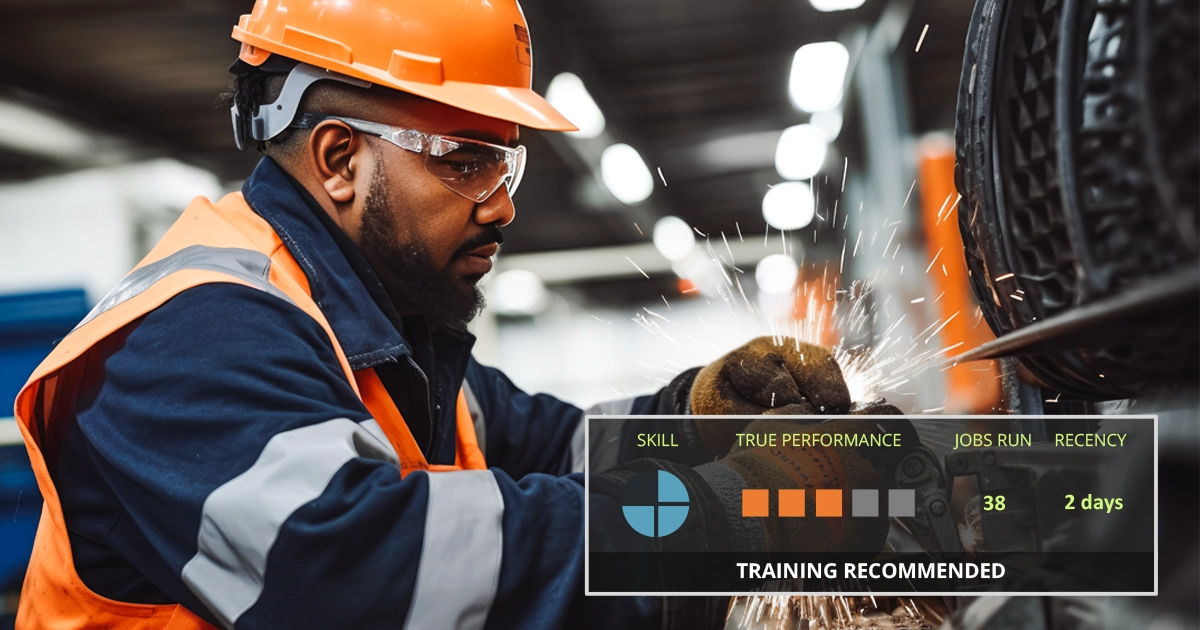
Truly optimized performance management is only possible when the work being done is connected to worker skills and competency training. The best way to do this is with AI-powered connected worker technology that uses AI to deliver insights on workforce development and act on data collected from connected frontline workers.

A

3. Employee Training and Development Programs:

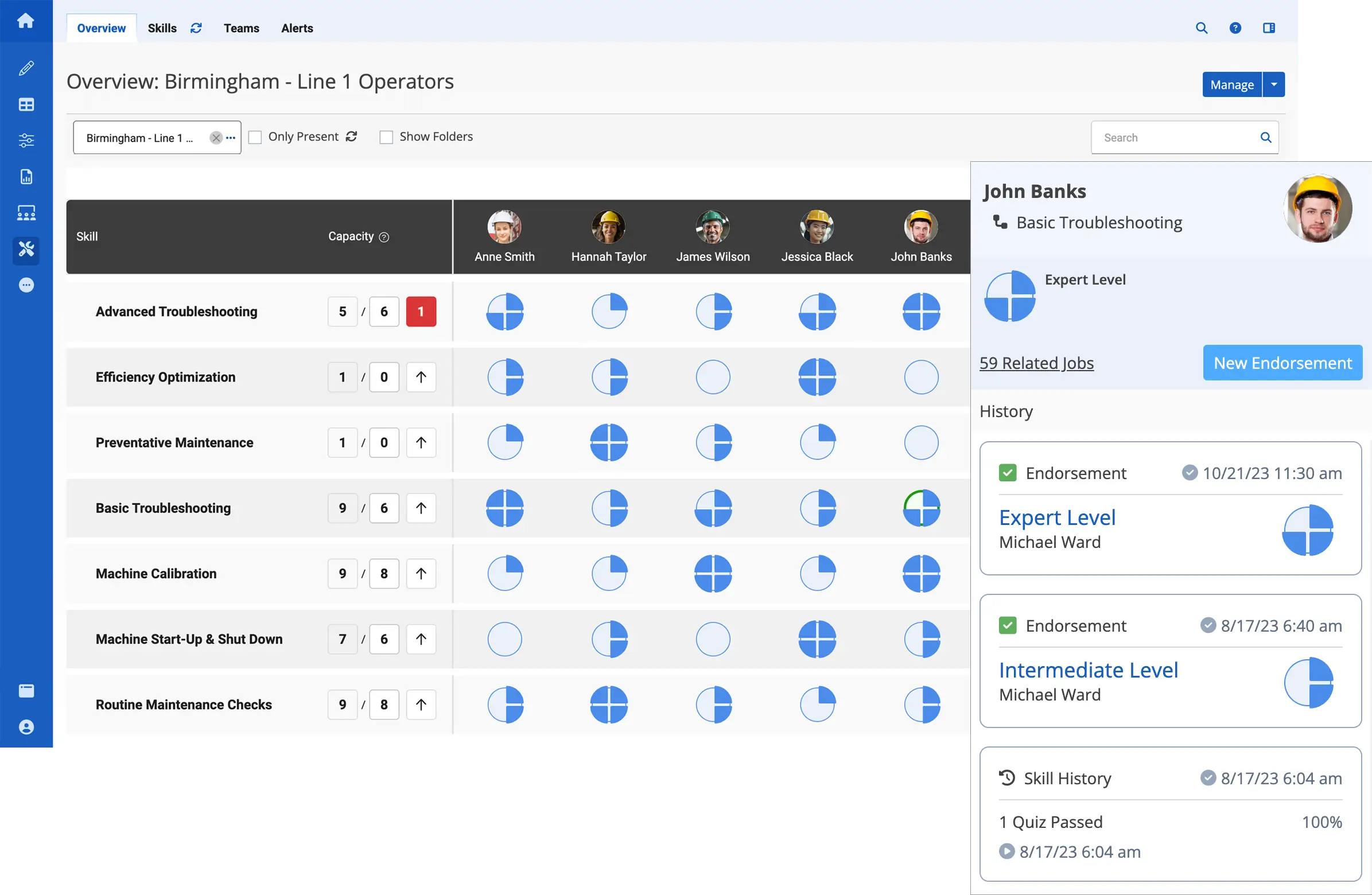
Prioritize ongoing training and development programs for manufacturing personnel. Equip frontline workers with the necessary skills to adapt to evolving technologies and operational requirements. Use performance management systems and other digital tools like skills matrixes to identify skill gaps, set training goals, and track progress, ensuring a skilled and adaptable workforce.

4. Regular Performance Reviews and Feedback:

Conduct regular performance reviews that provide constructive and timely feedback to employees. Use these reviews as opportunities to recognize achievements, address areas for improvement, and set new performance goals. Foster open communication between managers and employees to encourage continuous improvement.

5. Integration with Continuous Improvement Initiatives:

Integrate performance management systems with “kaizen” or continuous improvement initiatives such as Lean or Six Sigma. Use data from performance metrics to identify opportunities for process optimization, waste reduction, and efficiency improvements. This ensures that performance management is not only evaluative but actively contributes to the ongoing enhancement of manufacturing processes.

Leveraging these best practices contributes to a holistic performance management process that aligns manufacturing organizations and their frontline workforce with strategic goals, optimizes operations, and creates a culture of continuous improvement.

Key Performance Management Strategies for Manufacturing Leaders

The following are a few examples of performance management strategies that manufacturing leaders, plant managers, and shift supervisors should consider when implementing their performance management process.

Line-shift Goals

Manufacturers often use production planning and scheduling systems to manage line shifts effectively and ensure a smooth transition between different production configurations. While line shifts in manufacturing are often necessary for adapting to changing demands, introducing new products, or optimizing efficiency, they can also pose challenges, including downtime, quality control issues, employee fatigue, and planning issues. By establishing clear and measurable objectives for each line shift or individual worker that aligns with organizational goals, production leaders can ensure production goals are met.

Individual Meetings and Communication

Manufacturing leaders should implement a performance management strategy that incorporates 1-1 meetings and communication. Regularly providing constructive feedback to employees on their performance can improve performance and boost employee engagement. Offering coaching and development opportunities to enhance skills and capabilities.

Continuous Training

Continuous training in manufacturing involves enabling workers to learn new skills regularly. It’s a great way to improve employee performance and innovation, as well as engage and retain top talent. A good example of a continuous learning model is everboarding, a modern approach toward employee onboarding and training that shifts away from the traditional “one-and-done” onboarding model and recognizes learning as an ongoing process.

Performance Management Tools

Implementing performance management tools can help automate ongoing employee evaluation, as well as align employee performance with other key manufacturing KPIs, including production quality, machine uptime, and labor utilization. These tools can also be used to identify continuous improvement opportunities. This allows manufacturing leaders to adapt and refine approaches based on feedback and outcomes.

Simplifying Performance Management with Digital Tools

According to Forbes, as the future of work evolves and changes so must performance management, traditional methods may no longer be as successful in an era where the workforce is constantly changing.

Digital tools such as connected worker solutions and AI-driven analytics help simplify performance management systems by streamlining processes, improving efficiency, and providing more accurate insights. Implementing these connected worker solutions automates the collection of performance-related data from various sources including connected frontline workers, IoT devices, software systems, and more. This eliminates the need for manual data entry, reducing errors and ensuring real-time access to up-to-date information.

By digitizing the performance management process, organizations create a centralized platform for storing and managing performance-related data. This centralized knowledge base makes it easy for managers and employees to access relevant information, track progress, and collaborate on performance goals. Furthermore, AI-driven connected worker solutions allow for digital performance tracking, customized training and skills development planning, workflow optimization, and improved predictive maintenance.

performance management best practices in manufacturing

Through these digital tools and technology, manufacturing companies can simplify performance management processes, improve operational efficiency, and adapt to the demands of a rapidly evolving industry while fostering a culture of continuous improvement and development for their manufacturing workforce.

Augmentir is the world’s leading connected worker solution, combining smart connected worker and AI technologies to drive continuous improvement and enhance performance management initiatives in manufacturing.

Augmentir is trusted by manufacturing leaders as a digital transformation partner improving training and development, workforce allocation, and operational excellence through our AI-driven True Productivity™ and True Performance™ offerings, as well as digitizing and optimizing complex workflows, skills tracking, and more through our patented smart, connected worker suite. Schedule a live demo today to learn more.
 

See Augmentir in Action
Get in Touch for a Personalized Demo

Gartner identifies Augmented Connected Workforce initiatives as a top manufacturing technology trend for 2024.

According to Gartner, an Augmented Connected Workforce is the intentional management, deployment, and customization of technology services and applications to support the workforce’s experience, well-being and ability to develop their own skills. It is a revolutionary approach that leverages smart connected worker platforms, artificial intelligence (AI), Internet of Things (IoT) technologies, and other innovative solutions to augment and support frontline workers and create a seamlessly connected and dynamic work environment.

gartner augmented connected workforce

Gartner predicts that through 2027, 50% of Fortune 500 manufacturers will create new positions through innovative engagement models enabled by Augmented Connected Worker strategies.

In manufacturing, specifically, the driving factor behind the rapid increase in Augmented Connected Workforce adoption is the need to accelerate and scale talent. There is a significant gap in the skills of the workforce today and consumer demands are rapidly increasing. Even the World Economic Forum recognizes the benefits an Augmented Connected Workforce brings to the workplace, stating that it:

  • enables workers to acquire new skills and knowledge
  • creates a more accessible and inclusive working environment
  • improves worker well-being and safety
  • increases the efficiency and effectiveness of industrial operations
  • supports human connection and collaboration
  • and more…

Given these benefits it is clear that enabling an Augmented Connected Workforce will be key for manufacturing success going forward.

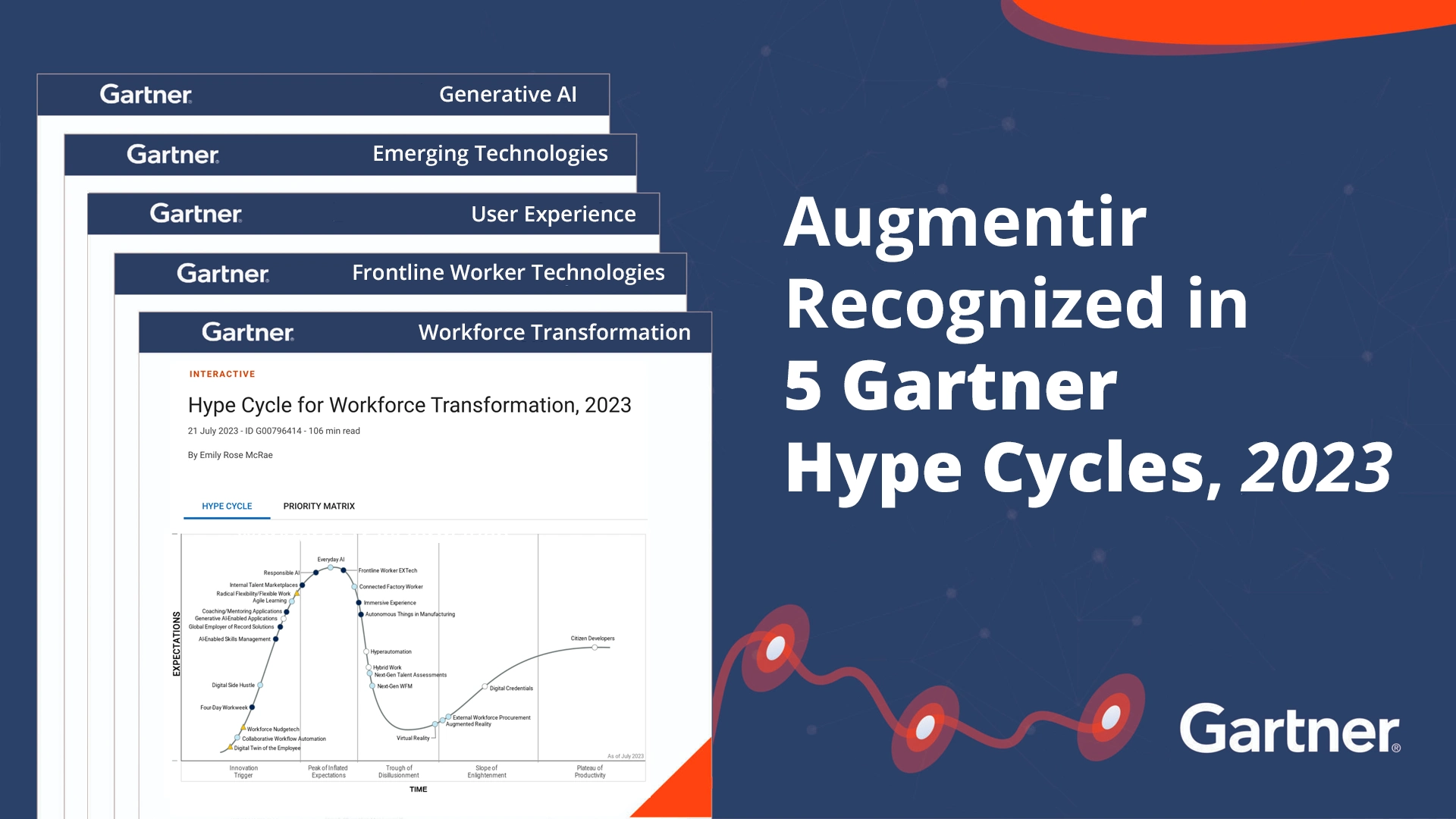
Augmentir Recognized in 5 Gartner Hype Cycles for its Connected Workforce Solution

Augmentir empowers organizations to embrace an Augmented-Connected Workforce by providing a comprehensive platform that combines connected worker and AI technologies. Through Augmentir, companies can seamlessly connect frontline workers with digital tools and knowledge bases, enabling them to access real-time guidance, instructions, and support directly within their workflows. This integrated approach augments frontline workers enhancing their capabilities, productivity, and overall business processes. By leveraging Augmentir’s platform, organizations can enhance productivity, quality, and safety while fostering a culture of continuous learning and innovation within their workforce.

Gartner recently highlighted Augmentir as a key software vendor providing functionalities and features that allow manufacturers to implement an Augmented Connected Workforce and empower frontline workers with AI-driven insights and real-time data for more productive, efficient, and safe frontline activities.

Augmentir was recognized in five separate Gartner Hype Cycle reports covering generative AI and emerging technologies in manufacturing.

augmentir recognized in gartner hype cycles


These five reports include:

  • Hype Cycle for Generative AI
  • Hype Cycle for Emerging Technologies
  • Hype Cycle for User Experience
  • Hype Cycle for Frontline Worker Technologies
  • Hype Cycle for Workforce Transformation

These hype cycle reports and innovation profiles are provided by Gartner to help organizations decide which new innovations and technology to adopt, as well as what value they can provide to their manufacturing operations.

Enabling an Augmented Connected Workforce in Manufacturing

Manufacturing is uniquely situated as an industry to benefit from an Augmented Connected Workforce leveraging AI-powered connected worker solutions for process improvements, quality, management, enhanced training, and more.

As manufacturing workers become more interconnected, organizations gain access to a valuable source of data related to manufacturing activities, execution, and team dynamics. By utilizing emerging AI tools in conjunction with smart connected worker solutions, companies can derive insights that pinpoint areas with significant potential for improvement.

At Augmentir, we believe that a connected worker platform’s purpose goes beyond just delivering instructions and remote support; it should continually optimize the entire connected worker ecosystem. AI plays a crucial role in addressing overarching trends like skills variability and the loss of tribal knowledge within the workforce. It serves as the cornerstone for implementing data-driven improvements in operational performance and continuous enhancement.

For example, after Augmentir is deployed for a period of time, our AI engine will start identifying patterns in the data that will allow manufacturers to focus efforts on the areas that have the biggest customer satisfaction, productivity, and workforce development opportunities. This gives organizations the ability to answer questions like:

  • What areas should they invest in to improve operational performance?
  • Where are their biggest areas of opportunity to improve productivity or quality management?
  • Where do they have skills gaps and what kind of training do their frontline workers need?

Augmentir’s AI continuously updates its insights to enable companies to focus on their largest areas of opportunity, enabling you to deliver year-over-year improvements in key operational metrics.

Interested in learning more?

If you’d like to learn more about Augmentir and see how our AI-powered connected worker platform improves safety, quality, and productivity across your workforce, schedule a demo with one of our product experts.


See Augmentir in Action
Get in Touch for a Personalized Demo

Learn the differences between onboarding and training in manufacturing, their benefits, and how to improve them with continuous learning.

Onboarding and training are essential components of integrating new employees into a manufacturing environment. Research by Brandon Hall Group found that organizations with a strong onboarding process improve new hire retention by 82% and productivity by over 70%. Additionally, research from NAM and The Manufacturing Institute has found that manufacturing organizations invest an average of 51.4 hours per employee in training and are increasing overall investment in training by an average of 60% in response to the growing skilled labor crisis.

onboarding vs training in manufacturing

Onboarding and training are two key components of a skilled workforce that, while similar, serve different purposes and cover distinct aspects of the employment process.

Both processes are crucial, as onboarding ensures that employees understand the organization’s broader context, and training ensures that they have the expertise to contribute to the manufacturing processes and meet quality and safety standards.

A successful combination of effective onboarding and comprehensive training can lead to more engaged, skilled, and productive employees in the manufacturing industry. Unfortunately, according to Gallup, only 29% of new hires say they feel fully prepared and supported to excel in their role after their onboarding experience.

Read below to learn more about the differences between onboarding and training in manufacturing, why they are both critical to manufacturing success, the benefits of improving them, and how continuous learning strategies coupled with connected worker solutions can improve both and deliver impressive results.

Breakdown of Onboarding and Training Differences

Onboarding in manufacturing is about orienting new hires to the company as a whole, while training is about equipping them with the specific skills and knowledge needed to perform their job functions effectively. Below a breakdown of the differences between onboarding and training in a manufacturing setting:

Onboarding

  • Purpose: Onboarding integrates a new employee into the organization and its culture. It aims to familiarize employees with the company, its policies and procedures, and their roles within the organization.
  • Focus: Onboarding focuses on introducing employees to the broader aspects of the company, such as its mission, values, and culture, as well as administrative and safety procedures.
  • Duration: Onboarding is typically a short-term process, often lasting a few days, but could extend to a few months in certain manufacturing environments.
  • Components: It may include activities like completing paperwork, understanding company policies, meeting the team, plant/site safety, and familiarizing a new hire with the physical workplace.

Training

  • Purpose: Training in manufacturing is a more specific and in-depth process that imparts the knowledge, skills, and competencies necessary to perform the job effectively. It is task-oriented and aimed at ensuring that employees can carry out their roles proficiently.
  • Focus: Training focuses on the technical aspects of the job, safety protocols, equipment operation, quality standards, and other job-specific skills.
  • Duration: Training is an ongoing process and may vary in duration depending on the complexity of the role and the employee’s experience level.
  • Components: Training tends to include hands-on instruction, demonstrations, practice exercises, and assessments to ensure that employees gain the necessary skills and knowledge.
Pro Tip

Both initial onboarding and ongoing training can be implemented with mobile learning solutions that leverage connected worker technology and AI to provide workers with bite-sized, on-demand training modules that they can access on smartphones or tablets. These modules can be developed with customized learning paths that are focused on the type of tasks and work employees are doing on the factory floor.

A

Why are training and onboarding important to manufacturing success

Onboarding and training are crucial to manufacturing success for several reasons including safety, compliance, quality, and more. A well-trained manufacturing workforce that has a deep understanding of company policies, its mission, and overall values drives successful initiatives by producing quality products, complying with both industry-wide and company-specific standards, and meeting production goals in a manner that is both safe and efficient.

The manufacturing industry is subject to numerous regulations related to safety, environmental practices, and product quality. Proper training ensures that employees are aware of and adhere to these regulations, reducing the risk of compliance violations and a well-structured onboarding program leads to lower turnover rates and a more effective and cohesive workforce, ultimately contributing to manufacturing success.

In summary, these two tools are essential in manufacturing for setting the stage for employee success and overall organizational success. Onboarding aligns new employees with the company’s culture, policies, and expectations, enhances their safety awareness, and fosters engagement and productivity, while training plays a pivotal role in contributing to manufacturing success by equipping employees with the knowledge, skills, and competencies necessary to perform their roles effectively.

What are the benefits of improving training and onboarding in manufacturing

Improving manufacturing employee onboarding and training offers several advantages, benefiting both the company and its employees. Comprehensive onboarding makes new hires feel connected to the company’s culture and values, while ongoing training can offer growth and development opportunities, leading to increased employee engagement and job satisfaction.

Companies with a skilled, well-trained workforce are more competitive in the marketplace, as they can produce higher-quality products at a lower cost and adapt to industry changes more effectively.

Training and development opportunities are often cited as a key factor in employee satisfaction. When employees feel that their skills are being enhanced and their careers are advancing, they are more likely to be satisfied with their jobs.

How continuous learning and connected worker solutions improve training and onboarding in manufacturing

Continuous learning and connected worker solutions can significantly enhance training and onboarding in manufacturing by providing more dynamic, effective, and adaptable approaches.

By incorporating continuous learning and connected worker solutions into the these processes, manufacturing companies can create more efficient, engaging, and rewarding experiences for employees. This not only accelerates the integration of new employees but also supports ongoing skill development and knowledge retention once on the job, ultimately improving productivity and the overall success of the organization.

connected worker as part of connected enterprise

Augmentir’s AI-based connected worker solution is being leveraged by manufacturing leaders to deliver continuous learning and development tools to optimize onboarding training for a rapidly changing and diverse workforce. Our innovative, smart connected worker suite is transforming how manufacturing organizations hire, onboard, train, and deliver on-the-job guidance and support.


digital skills management in a paperless factory

Schedule a live demo today to learn how our smart, connected worker solutions, AI-driven insights, and digital skills management are optimizing training and onboarding programs, tracking individual and team progress, and delivering targeted training and upskilling.


See Augmentir in Action
Get in Touch for a Personalized Demo

Learn how to apply everboarding in manufacturing, and how it is replacing traditional onboarding and training methods.

According to Brandon Hall Group research, investment in employee training and development programs to enhance skills and knowledge is the highest-rated initiative globally to improve the employee experience. One highly effective approach towards revolutionizing training and onboarding is a continuous learning method called everboarding.

applying everboarding in manufacturing

Everboarding is a modernized approach toward employee onboarding and training that recognizes learning as a continuous and ongoing process. Its foundational characteristic is the belief that learning doesn’t stop after the initial onboarding period. Instead, everboarding emphasizes continuous skill development and employee knowledge enhancement throughout their careers.

Applying everboarding in a manufacturing environment involves tailoring continuous learning and development approaches to the unique needs and challenges of factory floor operations. As industrial processes evolve, employees must be routinely educated on process improvements, new technologies, safety standards, and efficiency initiatives.

Read on to learn more about how to apply everboarding to the factory floor and how fostering a culture of continuous improvement and learning keeps frontline workers safe, efficient, and engaged:

Steps for Implementing Everboarding in Manufacturing Operations

Everboarding in the context of the manufacturing industry refers to a forward-looking approach that ensures employees remain well-trained, adaptable, and aligned with industry standards throughout their tenure. This is essential in dynamic and fast-paced industrial environments like manufacturing. Here are some steps and strategies to begin implementing everboarding in your operations:

  1. Operationalize Learning: Develop and maintain a systematic approach to training and workforce development and ensure that ongoing training and development are available for all shop floor workers.
  2. Develop Learning Pathways: Create clear learning pathways and career development plans for employees. These pathways should outline the skills and knowledge required for career advancement within the manufacturing shop floor.
  3. Implement Digital Learning Platforms: Leverage digital learning platforms and smart, connected solutions to provide employees with access to training materials, videos, courses, and other resources. These platforms can track progress, and employees can learn at their own pace.
  4. Integrate Learning into the Workflow: Using digital, mobile, and connected technologies, organizations can integrate training into the factory floor for moment-of-need guidance and microlearning that allows frontline workers to stay compliant and operations to continue smoothly.
  5. Provide Feedback and Improvement Loops: Create a feedback mechanism where employees can provide suggestions for improving training programs and processes. Make sure to act on the feedback to continuously enhance the training experience.
  6. Initiate Regular Skill Assessments: Implement regular assessments and evaluations to identify areas where employees need further training or improvement.

Everboarding in a manufacturing factory floor environment is critical for keeping the workforce skilled, adaptable, and able to meet changing demands and technological advancements. By fostering a culture of continuous learning and improvement, you can ensure that the factory floor remains efficient and productive.

5 Useful Everboarding Technologies

Implementing Everboarding in manufacturing requires the use of various technologies to facilitate continuous learning and skill development. Here are five (5) useful technologies that can help speed the adoption of everboarding methods on the factory floor and support frontline workers on their continuous learning paths.

  1. Learning Management Systems (LMS): LMS platforms are essential for delivering and managing training content. They allow manufacturing companies to organize courses, track employee progress, and ensure compliance with training requirements.
  2. Connected Worker Applications: Connected worker applications provide mobile solutions, real-time data, and actionable insights that enable customized and personalized training dedicated to the needs of individual workers and specific tasks.
  3. Artificial Intelligence (AI): AI-driven systems can personalize training content based on employee performance and preferences. AI’s ability to process vast amounts of data, provide personalized experiences, and offer real-time feedback makes it a powerful tool for implementing everboarding.
  4. Internet of Things (IoT): IoT sensors can be integrated into manufacturing equipment to gather data on machine performance and employee interactions. This data can inform training needs and help identify areas for improvement.
  5. Wearable Technology: Wearable devices can be used for on-the-job training and performance monitoring. They are especially useful in high-risk manufacturing environments.

These technologies leverage connectivity, digital tools, and data to create a more dynamic and adaptive learning environment for frontline employees. By integrating emerging technologies like smart, connected worker solutions into manufacturing operations, companies can create a more agile and adaptive learning environment that supports the foundations of everboarding.

Pro Tip

Digital training tools can help implement everboarding and improve learning speed and retention. For example, workers who need visuals or real-world scenarios can access them using AI-powered software to create a comprehensive everboarding and training program that supports frontline employees throughout the entire skills and training lifecycle.

A

Improving Manufacturing Training with Everboarding

Implementing new learning technologies in any industry is met with a certain number of challenges. This remains especially true for the factory floor where training and development are traditionally separate from the work being done, and where traditional onboarding has been a one-and-done type of approach.

However, because everboarding is a process of continuous learning, organizations can improve their industrial training and onboarding, ensuring employees continually acquire new skills and knowledge to adapt to evolving technologies and processes. This not only helps in training new employees but also enables continuous learning and skill development for the entire workforce, improving productivity, safety, and quality in the process.

Implementing everboarding in factory floor operations can seem complex but it is a rewarding process that can be streamlined through solutions like Augmentir’s connected worker solution. With our AI-driven insights, our connected solution reduces onboarding time and transforms workforce training, bringing learning to the factory floor through intelligent guidance that delivers information to workers at the point of need.

Learn how manufacturers are implementing Augmentir’s AI-driven connected worker tools to capture and digitize tribal knowledge, reskill and upskill their workers, and empower their frontline teams – schedule a live demo today.


See Augmentir in Action
Get in Touch for a Personalized Demo

A connected worker strategy is critical to the success of your connected enterprise and digital transformation initiatives.

In today’s always-changing industrial landscape, organizations are acutely aware that adopting innovative technologies and processes is not just a “nice-to-have” but a “must” to stay competitive. According to PwC, 75% of manufacturers believe that Connected Enterprise technologies will have a major impact on their business over the next five years. By 2025, the number of connected devices in industrial settings is expected to reach 21.5 billion, making it clear that the adoption of connected technologies is a critical step for any organization that wants to succeed in the future.

connected enterprise

However, there is one aspect of a truly connected enterprise that many manufacturers overlook – their frontline workforce.

Frontline workers play a critical role in ensuring the safety, quality, and uptime of production operations, yet too often these workers are disconnected from the rest of the business. Connected frontline worker (CFW), refers to the use of technology to connect workers with the digital systems and processes in their organization, making it easier for them to collaborate, access information, and perform their jobs more efficiently. To fully realize the benefits of a connected workforce, it is essential to understand how they fit into the larger Connected Enterprise concept.

Learn more about what a connected enterprise is and the role that connected worker solutions play in the following sections:

What is a connected enterprise?

Connected Enterprise refers to the integration of digital technologies, data, and analytics across an organization’s entire operational landscape to improve efficiency, productivity, and profitability. Companies are rapidly adopting advanced technologies to improve their business operations. This concept spans several initiatives within an organization: assets and equipment, the products being manufactured, the end customer, operations, workers, and the entire supply chain.

connected enterprise - LNS Research

Source: LNS Research

Connected worker (or connected frontline worker – CFW) technology is a crucial part of this concept – as it connects the human workforce with the digital systems and processes in the organization.

How to create a connected enterprise

The first step to creating a connected enterprise is implementing smart, connected worker solutions. AI and connected frontline worker technologies are some of the leading solutions organizations are turning to on their path toward a Connected Enterprise. Augmentir has seen manufacturers achieve significant results after successfully implementing connected frontline worker solutions in conjunction with AI-driven analytics:

  • Up to a 72% reduction in training and onboarding times
  • More than 20% decrease in downtime
  • Nearly a 25% increase in productivity

Solutions that incorporate enhanced mobile capabilities and combine training and skills tracking with connected worker technology and on-the-job digital guidance can deliver significant additional value for an organization’s connected enterprise initiative. Data from actual work performance combined with AI-based analytics can inform workforce development investments, and deliver smart insights that reduce time to productivity, enable targeted reskilling and upskilling, and provide individualized guidance and support at the point of work so that you get the best each person has to offer.

connected worker as part of connected enterprise

However, companies need to be strategic and take a structured approach. It is imperative that the right solutions are identified and tested by the right divisions, personnel, and business units.

LNS Research has developed an “Industrial Transformation Reference Architecture” approach that provides a framework and simplifies implementation into four layers:

  1. Business Processes and Systems
  2. Connected Assets and Operations
  3. Data and Analytics
  4. Connected Worker

These guidelines give organizations reference points to help guide them along their path of industrial transformation and set them up for success in connecting their operations.

Key benefits of connecting your workforce to your enterprise

By leveraging AI and other smart technologies, companies are providing workers with real-time guidance and assistance, enabling them to perform their jobs more effectively. Frontline workers can access information, collaborate with colleagues, and receive real-time alerts on potential hazards, all of which help to improve their productivity and safety.

The benefits offered by AI and connected technologies are significant:

  • Improved efficiency: By automating routine tasks and providing real-time information, AI and connected worker technologies can help streamline operations and reduce errors.
  • Increased productivity: AI and connected worker technologies can help workers perform their jobs more effectively, enabling them to produce more goods in less time.
  • Better quality control: By providing real-time data on production processes and product quality, AI and connected worker technologies can help identify issues early and prevent defects.
  • Enhanced safety: Connected worker technologies can provide workers with real-time guidance and assistance, enabling them to perform their jobs more safely and avoid accidents.
  • Cost savings: By reducing downtime, improving efficiency, and enhancing product quality, connected worker technologies can help companies save money and increase profitability.
  • Improved decision-making: By providing real-time insights and data analytics, connected worker technologies can help companies make more informed decisions about their operations and identify new opportunities for growth.

According to McKinsey & Company, by 2030, the adoption of “Connected Enterprise” technologies is expected to generate $1-2 trillion in value for the global economy, including the manufacturing industry. As the transformation from paper processes to digital continues, industrial organizations are consistently finding that CFW solutions are an essential component of a larger “Connected Enterprise”. By leveraging AI and other advanced technologies to better analyze data and provide actionable insights, companies empower workers with the tools to perform their jobs more effectively, improving productivity, efficiency, and safety. Adopting AI and connected worker technologies is a key part of industrial transformation and of “Connected Enterprise” initiatives, offering industrial organizations an enhanced competitive advantage and solutions to many of the obstacles they face in today’s markets.

Implementing a connected enterprise with Augmentir

If you are interested in learning for yourself why companies are choosing Augmentir to help them connect, digitize, and optimize their frontline operations – reach out to book a demo.


See Augmentir in Action
Get in Touch for a Personalized Demo


Learn how to improve quality control and assurance in the food industry with digital solutions from Augmentir.

Following quality control (QC) and quality assurance procedures in the food industry is imperative to ensure product quality and consumer satisfaction. Today’s consumers demand safe, reliable goods that meet all quality inspection protocols. The last thing you want is for a product to get recalled because of potential health concerns.

According to Food Manufacturing, quality control is one of the most important aspects of the food and beverage industry. Manufacturers who perform routine inspections of products during each stage of the production process significantly increase their chances of delivering items that are free of health hazards and liabilities. But beyond avoiding these concerns, standardizing and digitizing quality procedures benefits the entire operation.

Ultimately, preventing and catching quality issues can boost product quality, reduce waste, raise profits, increase brand reputation, and avoid media or food safety disasters. Learn more about QC and assurance in the food industry and how to improve it as we discuss:

quality control food industry

Types of quality control measures to take

There are certain QC measures you can take to ensure that all goods meet quality standards, from regular machine inspections to worker training. They fall into two general categories: preventative and reactive.

Preventative (proactive) quality control: Minimizing the number of deficiencies begins with implementing preventative QC solutions. When workers can catch mistakes before they even happen, they prevent product defects. Preventative QC measures should be practiced on a routine basis and can range from inspecting machines and equipment to offering employee training opportunities. By providing workers with real-time information and guidance through mobile, connected worker solutions, manufacturers enable them to make better decisions about product quality, reducing the risk of errors and identifying potential quality issues before products are shipped to customers, reducing the risk of product recalls, and preserving consumer trust.

Reactive quality control: Catching every defect on the production floor is nearly impossible, even if the most fool-proof strategies are taken. That’s why creating a plan of action ahead of a crisis can help solve quality issues as they happen.

What to put in your plan will depend on the potential problems. For example, you can include specific instructions on what to do if machinery breaks down or stops unexpectedly. It’s vital to collect any data at this stage. Analyzing this data can help you improve preventative quality control in the future to make sure the same problems don’t happen again.

Pro Tip

By utilizing AI and modern, digital technologies, companies can connect, engage, and empower frontline workers to drive quality improvements, resolve quality issues faster, and share timely insights with teams across the value chain.

A

Keep in mind that practicing quality control in the food industry should be part of every manufacturing process, from product ideation and development to production and delivery. Problems can develop at any time, so it’s crucial to follow protocols at every stage of production to prevent even the slightest of mistakes.

All workers should also uphold QC and assurance protocols in their everyday tasks to ensure continuous product improvement.

Better organization of equipment can also help workers understand how the action of one affects the other to solve any potential problems. This is another benefit of integrating your asset hierarchy with a connected worker solution. In a nutshell, strong hierarchies are a solid foundation for proper maintenance management and reliability.

How to improve QC and assurance procedures in food production

Effective quality control and assurance procedures prevent defective food products from making their way into grocery stores and homes. That’s why manufacturers should document the quality of their goods at every stage of the operational process. Strategies like first time quality (FTQ), or first time right, plans coupled with smart, connected solutions help decrease product deficiencies and increase customer satisfaction.

Manufacturing firms in the food industry must follow specific requirements set by the Food and Drug Administration (FDA), Good Manufacturing Practices (GMP) system, and the Hazard Analysis and Critical Control Points (HACCP). The guidelines set by these regulatory bodies can give businesses a better idea of how their processes should look and what data they need to collect and report.

Data should be collected for real-time production processes. These vary by product but may range from product chilling and thermal processing to testing raw materials for metal toxins and other chemical deposits.

The following steps provide a roadmap for how to improve quality control in the food industry.

Step 1: Source the correct ingredients

A successful assembly line run begins with finding and using the correct ingredients. Some things to think about when deciding which ingredients to choose: where the raw material was sourced, when, and its condition.

Step 2: Include an approved supplier list

Make sure that each ingredient has an approved supplier list. A good rule of thumb is to include three vendors per ingredient and record the ingredient with each supplier’s name, address, and code number on the list. The more information you include, the better. Having an approved vendor list ensures that all parties are properly vetted by the manufacturing firm and meet its requirements for quality and distribution.

Step 3: Document product and recipe creation

Documenting how each food item is made and its recipe helps set the quality standards for finished goods. This documentation can also be useful when improving product development in the future. Your document should include the types of ingredients used, their codes, batch yield, percentage formula, and more.

Step 4: Catalog production procedures

It’s also critical to log all the details of a production process, including how materials should be delivered, the appropriate conditions for storing food, what order each ingredient should be added to the batch, what tools are needed, and who is in charge of each task.

Note that this step is different from documenting product and recipe development because it includes the actual instructions for carrying out each procedure. For example, a worker may be asked to preheat the oven to a certain temperature as part of ensuring the food is ready for customer distribution.

Step 4: Record real-time processes

Machine operators should record in real-time every detail of how goods are created during actual production. This can include factors like product size, weight, expiration date, equipment conditions, and more.

Step 5: Digitize assurance and inspection processes

AI and smart, connected worker systems help digitize and link inspections and other quality control procedures. This creates an additional layer of defense, protecting customers and preventing quality issues before they can impact production.

How Augmentir helps with quality control and assurance

Augmentir offers a smarter way to improve quality control in the food industry by effectively standardizing and optimizing quality assurance and inspection procedures for all frontline workers. With our smart, connected solutions coupled with AI-powered software, food manufacturers have improved quality control and assurance by:

  • Tracking and analyzing data to identify trends and opportunities for improvements
  • Reducing human error in inspections by standardizing and improving training procedures and processes
  • Transforming connected workers into human sensors who can proactively address quality and safety events that surface during manufacturing operations

standardize and digitize quality assurance procedures


Our AI-powered connected worker solutions, provide digital work instructions to help employees better perform inspection checks and reduce the number of production errors and rework.

These customized solutions also include:

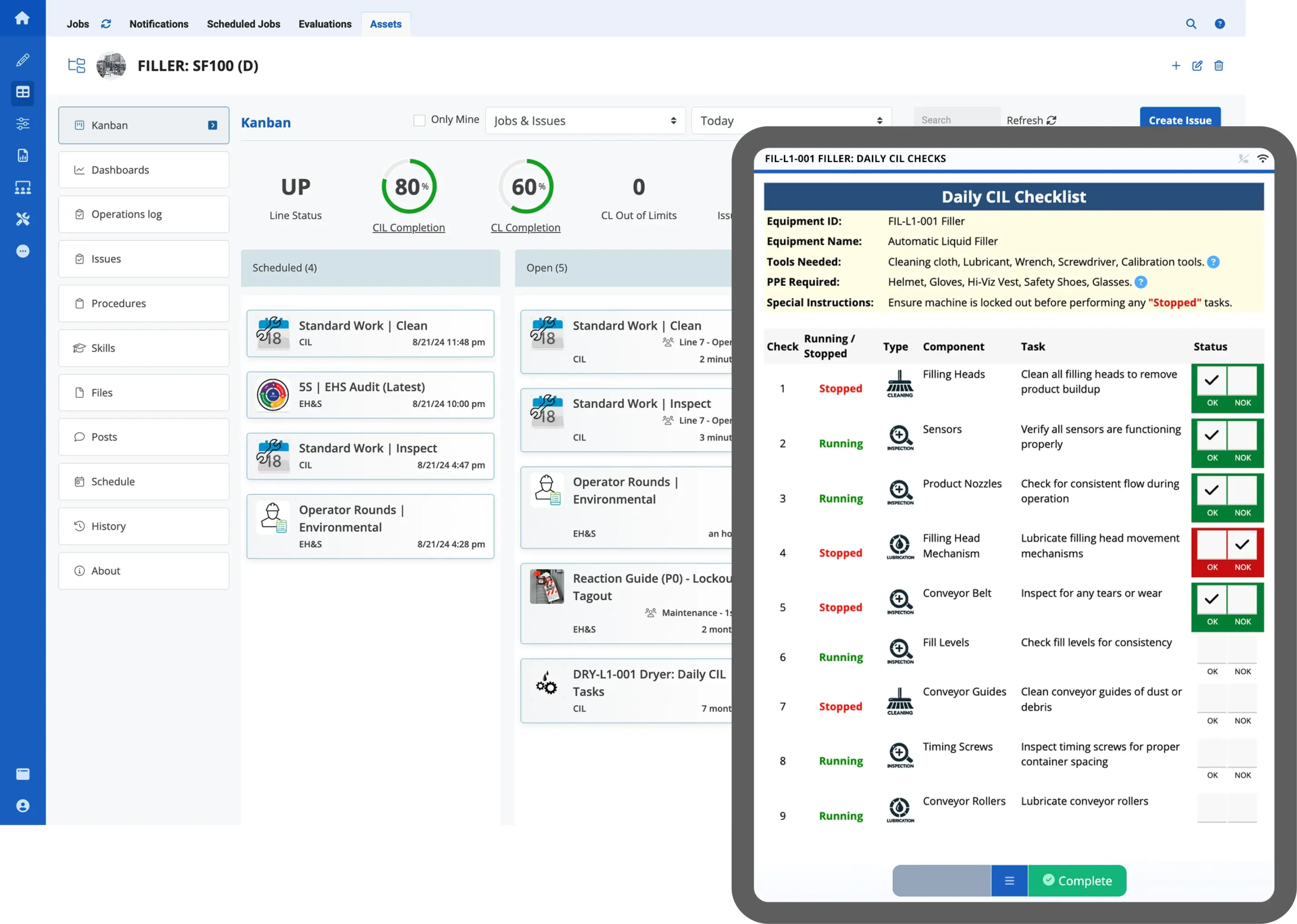
  • Digital standard operating procedures (SOPs) for how to complete assembly line tasks. These step-by-step instructions can greatly improve workflow efficiency, increase regulatory compliance, and reduce mistakes on the shop floor.
  • Digital workflows that convert your paper-based processes to digital work instructions and personalize them to the needs of each worker.
  • Enhanced product traceability to decrease equipment setup time, reduce process inconsistencies, and better meet customer expectations. Our digital instructions help you to easily track materials from the supply chain, inventory, and across every production process.

If you are interested in learning why companies are choosing Augmentir to help improve their quality control and assurance processes, check out our quality use cases – or reach out to schedule a live demo.


See Augmentir in Action
Get in Touch for a Personalized Demo


Learn how to write manufacturing SOPs and the benefits of having standard operating procedures in a manufacturing operation.

Standard operating procedures, or SOPs, will change the way you run your manufacturing operations.

SOPs are imperative to a properly organized management structure. They are step-by-step guidelines workers must follow when carrying out tasks to standardize work and are designed to meet industry regulations.

Essentially, they provide general info about assignments, including the tools, methods, or machinery needed to complete projects. SOPs indicate what the task is, who will perform it, how it should be completed, and when it should be completed.

manufacturing sop

For example, manufacturers may write SOPs for employee training to reduce risk and injury. Leadership may also use procedures to assign goals and measure employee performance.

Read on to find out more about the benefits of manufacturing SOPs and how to write them by exploring the following topics:

Advantages of Implementing Standard Operating Procedures

According to Forbes, a comprehensive SOP keeps workers on the same page and improves efficiency and accuracy. Without documented procedures, there is no way to set proper standardized processes and workers might try to complete jobs in non-standard methods, which leads to disruptions in the production processes and causes all sorts of quality issues in a manufacturing environment. Thankfully, SOPs work to prevent that from happening.

Some of the advantages of using SOPs include:

  • Meets regulatory compliance: Product inspectors constantly ask to review SOPs when conducting audits. These serve as the point of reference for whether specific measures followed meet industry guidelines.
  • Standardizes tasks: The point of written procedures is to establish a standard way of completing tasks. They enable tasks to be performed in the same way across the company.
  • Improves accountability and tracking: SOPs define who is responsible for a work order, maintenance check or inspection. This reporting can improve accountability across departments. If a task wasn’t completed accordingly or a procedure was missed, management can take necessary steps to prevent it from happening again.
Pro Tip

Digitized SOPs can further improve tracking and traceability features, helping manufacturers comply with regulations and quality standards. With digital SOPs it becomes easier to maintain records of every step in the production process, including who performed each task and when.

A

How to write a manufacturing SOP

Writing a comprehensive set of SOPs can help workers perform tasks in the safest and most efficient way possible. Although there isn’t an official way to write procedures, you can follow certain steps to make them more effective:

Step 1: Establish a goal.

It’s important to think about what you want your SOP to accomplish. Regardless if you’re starting a new process or improving an existing one, figuring out the end goal will make it easier to complete the document.

Step 2: Pick a format.

There are different formats you can use to write your document: step-by-step, hierarchical, narrative, etc. We recommend the sequential step-by-step format for its straightforwardness.

Step 3: Write the procedures.

Make sure your procedures are clear, concise, current, consistent, and complete.

Step 4: Review and update.

It’s important to review your SOP for any discrepancies and update them if necessary. Consider asking fellow leaders knowledgeable in procedure creation to read them over.

Why SOPs are Important in Manufacturing

Compliance with manufacturing SOPs is crucial for a number of reasons, including:

  • Prevents accidents and ensures worker safety
  • Promotes worker consistency
  • Improves product quality
  • Protects your business’s reputation

SOPs are a critical component of manufacturing operations because they provide a structured framework for achieving consistent quality, safety, and efficiency in the production process. They help manufacturers meet regulatory requirements, reduce errors, and ensure that employees are trained to perform tasks consistently and safely.

Digitizing Manufacturing SOPs with Connected Worker Solutions

Using connected worker technologies to create digital SOPs can significantly improve their impact on manufacturing by enhancing accessibility, effectiveness, and overall utility.

Through digitization and smart, connected worker technology manufacturers can improve SOPs with features like real-time access, remote collaboration and guidance, data-driven insights, workflow automation, enhanced training, traceability and compliance, and more. Essentially, with these advanced technologies, manufacturing organizations can augment and support their workers with optimized processes and SOPs creating an environment of continuous improvement.

Augmentir offers customized AI-powered connected worker solutions that transform how you write and create manufacturing standard operating procedures. Request a live demo today to learn more about why leading manufacturers are choosing our solutions to improve their manufacturing processes.


See Augmentir in Action
Get in Touch for a Personalized Demo