Posts

Augmentir’s take on the trending Workforce Institute’s staggering survey numbers.

Everyone is talking about it. The skilled labor shortage. It’s not a temporary problem. It’s here to stay. So instead of panicking and trying to use the same old strategies to identify, recruit and retain the increasingly rare skilled and experienced worker, let us present a different way of looking at the labor challenge. Spoiler alert: we see opportunity!

But first, let’s unpack some recent survey findings about the labor market. 

According to a survey by the Workforce Institute, a whopping 87 percent of manufacturers are feeling the ramifications of the shortage of skilled labor, including staff misalignment along the production lines, burnout, and supply chain disruption. 

Finding workers with the right skills, education and certifications can feel like looking for a needle in a haystack–hopeless and painful. The shrinking talent pool is forcing companies to rehire former employees who previously quit with limited skills or individuals with no manufacturing experience; it probably feels like the only viable option for production survival.

Where do you start with this new variable workforce? Standardized training programs? Excel spreadsheets for tracking and monitoring? These methods pose a concern for all workers on your production lines, regardless of their experience or skill set. Who needs what training? Who is responsible for tracking productivity and capturing relevant data? How confident are you in endorsing skills and assigning production teams with limited or imprecise information?

The old way would have led to panic. Today, there’s a better, smarter way. Today’s variable workforce in the manufacturing world is perfectly suited to adopt smart technology that will reduce, if not eliminate, the challenges associated with the labor shortage. Remember that thing we said about opportunity? Here it is.

Stay calm and carry on: smart digital tech can have an immediate and direct impact on learning about and managing worker skills.

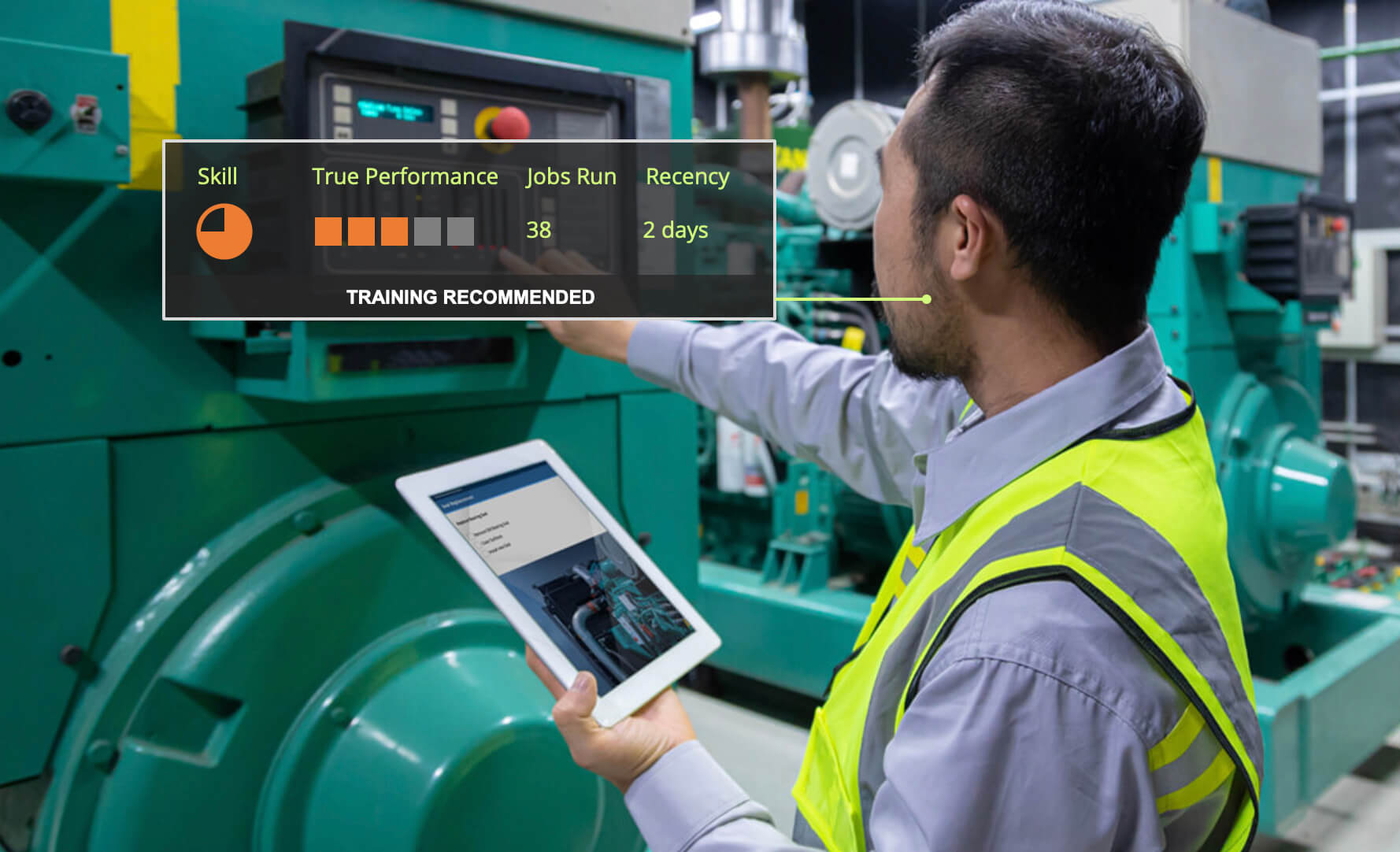
Imagine if you could learn about a worker’s skills by tracking their performance in real time, immediately deliver training resources tailored to them based on their proficiency and certifications and then match them confidently to a production team where they’ll make a meaningful contribution. Sound like wishful thinking? It’s not.

Smart connected worker technology can collect data on worker patterns by tracking their performance journeys. It pulls relevant resources from the company inventory to deliver customized training programs. With the right training in place workers are engaged and feel safe while performing tasks. And, your teams are equipped to meet productivity goals.

The labor shortage is just a statistic. A smart connected worker suite is the solution.

Augmentir’s smart connected worker suite closes the gap between training and worker execution. Digitized instruction and skills management programs display and organize workers’ proficiencies based on levels of expertise. AI-driven insights monitor and easily match workers with procedures by assigning skills criteria. This proprietary Smart AI technology intelligently prompts workers for continuous training and accurately identifies appropriate skills endorsements to managers, helping them create better production lines. It’s the only solution of its kind on the market.

Kylene Zenk, Director of the Manufacturing Practice at UKG sees opportunity, too:

“If you can offer training or can tailor a job to meet candidates’ flexible qualifications, filling open headcount becomes more realistic in a tight labor market.”

We couldn’t agree more. Find out more about how and why manufacturers are taking smarter approaches to building a strong talent pipeline with Augmentir. Contact us for a demo today.

Prior to Augmentir, our founding team was involved in founding Wonderware Software in 1987, Lighthammer in 1997, and ThingWorx in 2008. In 2017, we recognized that the technology and market forces were aligned yet again, for a fourth industrial software revolution. A revolution that focused on increasing the productivity and quality of processes involving front-line workers.

Times have changed since 1985 when relying on tribal knowledge was the only option for a frontline worker, and today, via digital transformation efforts, we are lucky enough to have new technologies and resources that enable frontline workers to do their best work in a complex world. Although taking the steps toward digital transformation can seem scary or overwhelming, the longer you wait and “do nothing”, the more difficult it becomes to modernize. Not having the proper resources or being unsure about the digital transformation process are common hesitations for most organizations.

Beginning your digital transformation is like beginning your journey to the gym after a long day. You can come up with a million excuses for not wanting to get your workout and usually, the hardest part is actually taking the first step to get there. But once you’ve started, you never regret it! According to LNS Research, most manufacturing companies have at least begun their digital transformation journey, and for those that have not, the hardest part is just taking the first step.

Here’s what doing nothing is costing you today.

“Doing nothing” is costing you $234,900 every year with 1 changeover

If you could reduce variability in the execution of one changeover you could save 15,660 hours each year.

If the variability in completing a changeover between 2 operators is 1 hour and a changeover is performed 1/day, you are losing 261 hours each year for 1 operator.

Now, let’s look at shifts – if the average variability between A-shift, and B-Shift is +1 hour and C-Shift is +2 hours – with a total of 20 frontline workers on each shift and each operator performing 1 changeover /day the variability in hours relative to A-Shift is equal to 60 hours every day and 15,660 hours each year.

Multiply that times at the national average of $15/technician, over the course of 1 year, “doing nothing” for just 1 task is costing you $234,900 in employee time alone.

Quantify increased throughput, proficiency, productivity, and quality though frontline digital transformation, and there is even more impact!

“Doing Nothing” for manual data entry is costing you $97,875 per year

If you could save 15 minutes per day for an operator by eliminating data entry, after 1 year you would save your employee 3,915 minutes!

Multiply that time across 100 employees at the national average of $15/technician, “doing nothing” is costing you $97,875 per year.

“Doing Nothing” for apprenticeship programs is costing you $5,742,00

The average time for a new unskilled hire in an apprenticeship program is 2 years. If you could reduce the time that the new hire spends in the apprenticeship by 25%, you would save 1,044 hours for each new worker you hire. Reducing apprenticeship time by 50% would save 2,088 hours for each new hire. Reducing apprenticeship by 50% for 50 unskilled new hires would save you 208,800 hours.

Multiplying that time at the national average of $15/hour across 50 new hires, “doing nothing” to reduce a 2 year apprenticeship program by 50% is costing you $1,566,000.

Quantifying the impact on the skilled workers giving their time to the apprenticeship program, at $40/hour across 50 new hires amounts to an additional $4,176,000.

Why not start today?

If increasing proficiency can pave the way towards frontline worker digital transformation and save you the cost of doing nothing, why wouldn’t you start today?

If reducing variability can pave the way towards frontline worker digital transformation and save you the cost of doing nothing, why wouldn’t you start today?

If one simple digital procedure can pave the way towards frontline worker digital transformation and save you the cost of doing nothing, why wouldn’t you start today?

The business impacts of doing something are clear:

  • Accurate Data Entry
  • Job Visibility
  • Execution variability insight
  • Downstream impact
  • Decrease downtime
  • Increase throughput
  • Reduce/ Eliminate training
  • Easily accessible documentation

With the proper AI-powered Connected Worker tools, your workers become more integrated and you gain access to a new rich source of activity, execution, and tribal data that lead to valuable insights into areas where the largest improvement opportunities exist. AI lays a data-driven foundation for continuous improvement in the areas of performance support, training, and workforce development, setting the stage to address the needs of today’s constantly changing workforce.

If you don’t start now, there’s always going to be something that happens in the next 6 months that will also prevent you. This was a trend that was occurring before the pandemic, but the pandemic has accelerated it greatly. There is pressure to keep up with the new normal and the faster you start the better equipped you will be. You could continue to fight this fire with a firehose and keep it at bay, but the fire isn’t going away until you solve the root problem.

You have an opportunity, right now! Older workers are aging out, and you’re working hard to hire new, young, bright, excited workers. These younger workers expect tech. They’ll embrace change. If not now, when?

Connected frontline operations platforms are helping manufacturers reduce downtime and provide a foundation for a holistic preventive maintenance strategy.

First time quality plans, or first time right plans, are a manufacturing approach that ensures all processes on the production floor are performed properly the first time, every time. A FTQ plan is a document that outlines which standards, practices, and resources are needed to execute those procedures to create high-quality products.

A quality plan is a must to guarantee zero-defect goods and prevent the need for any rework or scrapping of parts. If a manufacturer’s goods do not meet internal, industry, or consumer standards, then it’s more than likely that they won’t sell.

first time quality

Every product development project should have a quality plan in place. Read on to learn how to create a first time quality plan document:

What to include in a first time quality plan

A FTQ plan, when executed correctly, can help you reach 100% FTQ, which means zero defective products. As a result, it boosts consumer trust in your product and your company’s credibility. It’s a good way to cover all bases to ensure nothing is left out, from product goals and objectives to testing requirements and distribution.

A FTQ plan may contain the following:

  • Goals and objectives, including item specifications, cycle time, materials, cost, etc.
  • A list of procedures
  • Worker expectations and responsibilities
  • What industry standards should be applied
  • A method for measuring quality
  • Testing requirements
  • Updates to procedures

3 steps for creating a FTQ plan

Developing a quality proposal is a great starting point for making sure that products are made right the first time around.

The steps below explain how to successfully create first time quality plans and strategies that give your manufacturing operations a competitive edge.

Step 1: Conduct an initial audit

Creating a FTQ document begins with an initial audit of the suppliers a manufacturer will use. An audit is the perfect way to gauge whether a supplier matches your product expectations and meets your quality standards.

An audit may check:

  • Materials
  • Equipment/machinery
  • Procedures
  • How well staff is following processes

Step 2: Determine if suppliers meet product specifications

Next, it’s vital to check whether a contractor can produce items that meet your standards and specifications. It’s also important to establish a partnership and a solid communication process with your supplier so that nothing falls through the cracks.

Step 3: Implement quality inspections

Lastly, a well-formulated plan includes quality inspections of each production run and product before distribution. This is usually completed by quality inspectors on the shop floor.

Inspection criteria typically includes:

  • Order and shipment sizes
  • Packaging and appearance
  • Product performance

Once the inspection is done, a report should be created and submitted to the quality manager before any products are shipped. This report also serves to measure quality metrics and places for improvement.

First time quality with Augmentir

Augmentir is a connected worker solution that allows industrial companies to digitize and optimize all frontline processes that are part of their quality management strategy. Augmentir’s complete suite of connected worker functionality is built on top of Augmentir’s patented Smart AI foundation, which helps identify patterns and areas for continuous improvement.

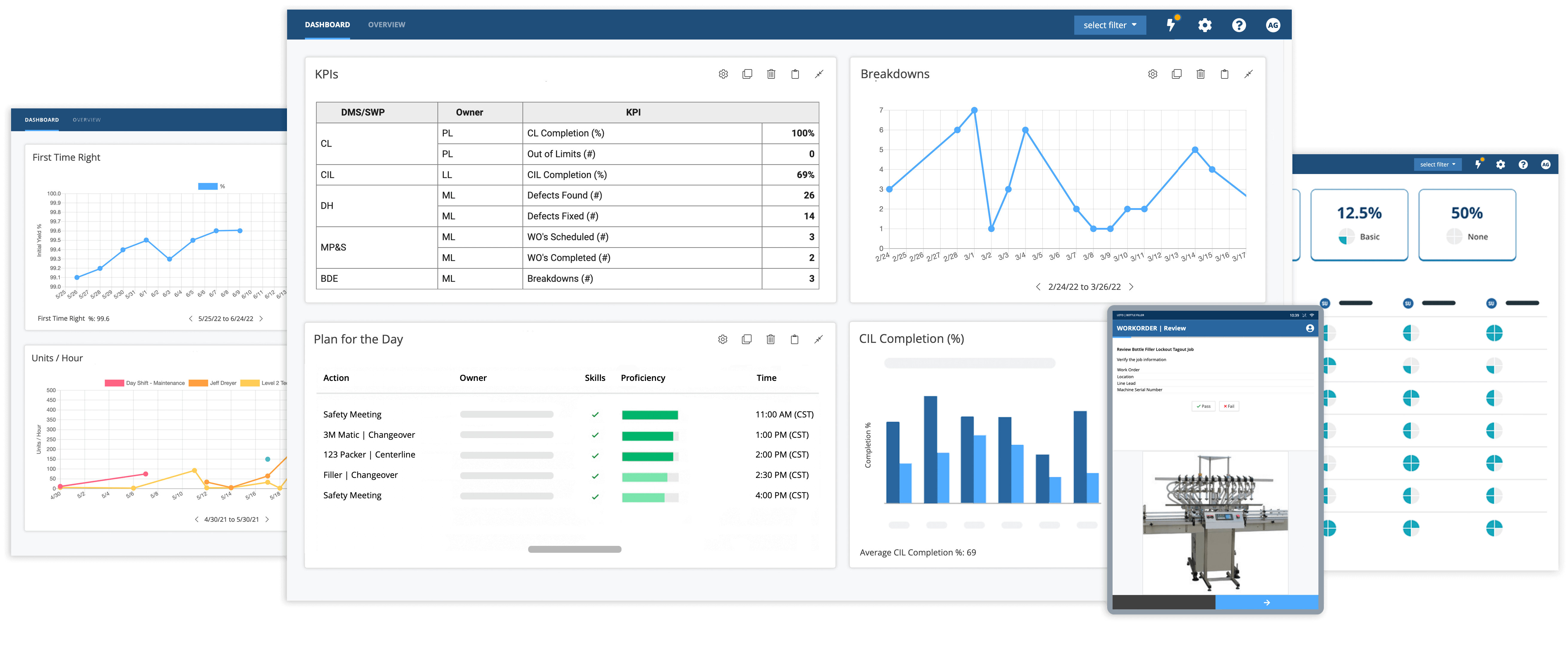
manufacturing kpi first time right


Smart Skills Management software is helping manufacturers bridge the gap between training, skills, and work to build a more resilient and agile workforce.

Where are you on your journey with adopting new and emerging technologies? Many manufacturers are jumping on the bandwagon for some of the latest tools that provide digital guidance to workers. Maybe you decided to implement digital work instructions to help workers safely and efficiently perform tasks. Or maybe you’ve bought skills management software to help you catalog and organize the skills and capabilities of different workers. But are either of these enough on their own to achieve all your production goals? Possibly, but unlikely.

Digital work instructions on their own deliver standard work guidelines but fail to consider the unique skills of each worker. Standalone skills management programs may offer a highlight reel of the skills and certifications of your workers but neglect to capture performance in real-time to provide accurate skills evaluations. Nor do they offer personalized training content needed to ensure workers perform their absolute best. Can we agree then these two features should go hand-in-hand?

One cannot exist without the other: Blending skills into the flow of work

In the past, standalone skills management systems were sufficient because:

  • Turnover was infrequent so line supervisors knew everyone on their team and their current skills and endorsements, making it easy for the supervisor to assign work safely and optimally
  • Investments in training, reskilling, and upskilling were performed either in a one size fits all approach or through a purely subjective or anecdotal approach

Today, however, a different situation exists.

Line supervisors are dealing with team members that they don’t know well, new ones starting every day, and experienced ones leaving.  This creates safety issues and makes optimally assigning work difficult as not only are the workers variable, but their skill levels and certifications are a constantly moving target.

An integrated, closed-loop skills management system is the solution for this era of high workforce turnover and absenteeism.


skills and work


Skills management solutions that combine skills tracking capabilities with connected worker technology and on-the-job digital guidance can deliver significant additional value. Data from actual work performance can inform workforce development initiatives allowing you to target your training, reskilling, and upskilling efforts where they have the largest impact.

It can generate an abundance of valuable data to provide tailored training support and skills endorsements and identify workforce opportunities. What else is possible? Imagine reducing training costs, optimizing job scheduling, increasing safety, and improving productivity. And now consider what will happen when you add smart technology to this all-in-one package.


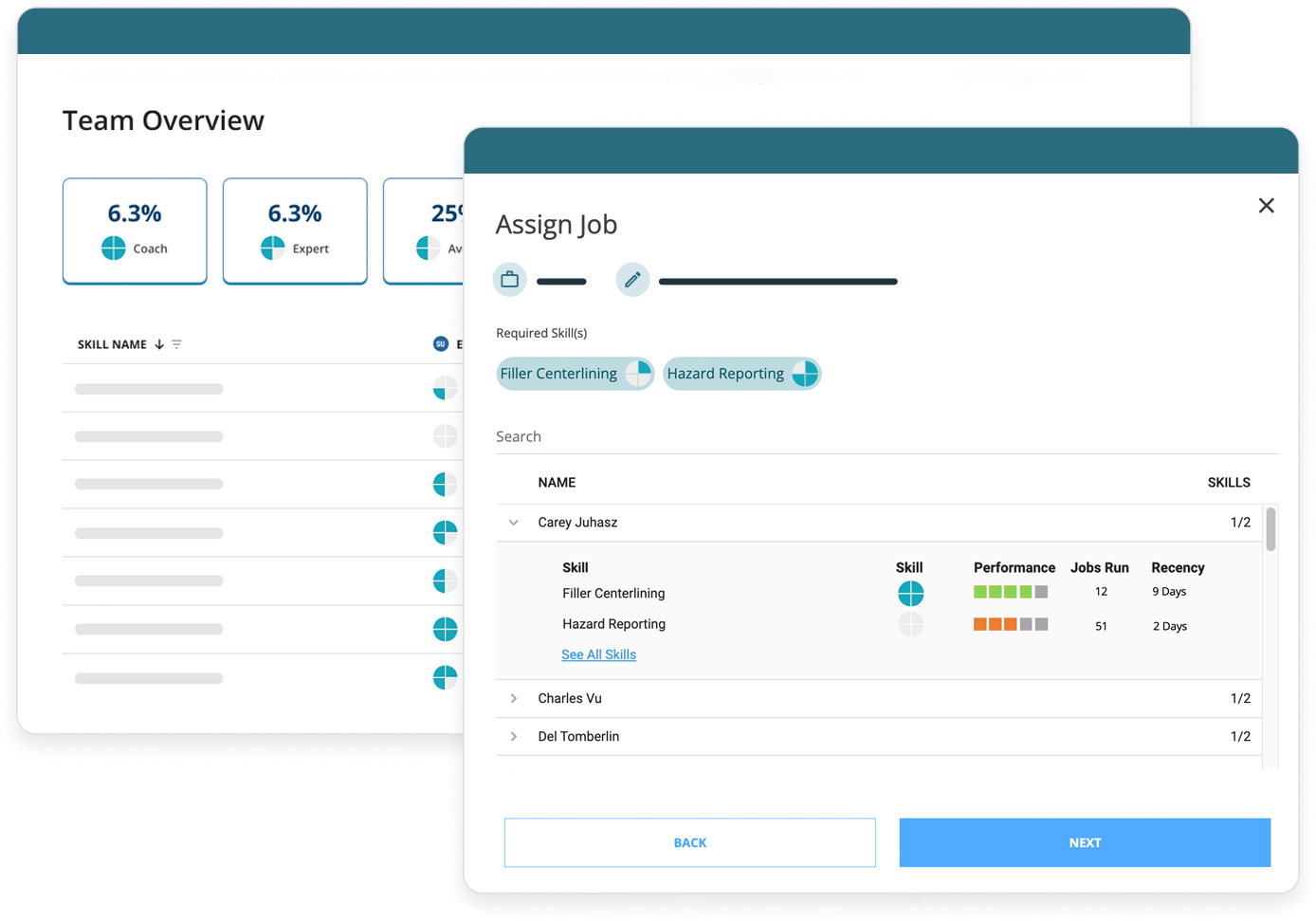
intelligently assign jobs

The power of smart digitization! Skills management and digital work instructions together boost productivity.

According to Deloitte, organizations are shifting to a skills-based approach to meet the demand for agility, agency, and equity. Connected worker solutions that combine skills management with digital work instructions, collaboration, and knowledge management are uniquely suited to optimize today’s variable workforce. AI-generated insights are pulled from patterns identified across all work activity in real-time. These insights identify where new and experienced workers may benefit from either reskilling or upskilling.

This combination of smart digital technology can also leverage your training resources, such as instructional videos, written instructions, or access to remote experts, to deliver personalized guidance for the worker to perform their best. These tools intelligently work together to help you assign workers to procedures based on required skill levels. No second guessing! Augmentir is the only smart connected worker solution to intertwine these management tools with AI making it a powerhouse for optimizing your operations and meeting production targets.


Learn how Smart Skills Management software is helping manufacturers bridge the gap between training, skills, and work to build a more resilient and agile workforce.

Download our latest eBook – The Future of Work: Connecting Skills Management with Standard Work.


Learn the five steps to upskill and reskill manufacturing employees. Find out the benefits such as improving productivity and retention.

While the terms ‘upskill’ and ‘reskill’ in reference to manufacturing workers are often used interchangeably, they are not the same.

Upskilling refers to cultivating a worker’s skillset to help them excel in their current role. Meanwhile, reskilling involves teaching an employee new skills in order to transition to a new role.

For example, a programmer can be reskilled to become a systems analyst. Or workers can be upskilled to manage technology as more jobs become automated.

Half of all workers will need to be upskilled by 2025 as more jobs become digitized, according to the World Economic Forum. Workers will take on more critical thinking and problem-solving roles, leaving technical tasks to artificial intelligence and machine learning. Furthermore, the growing skilled labor gap in manufacturing has created a workforce shortage, and upskilling and training are becoming necessary to ensure production capacity is met.

Explore the following topics below to learn more about upskilling and reskilling in manufacturing, including a step by step guides to reskilling and upskilling manufacturing workers.

What does upskill mean?

Upskilling involves evaluating an employee’s existing skills and helping them to advance in their current role. It helps facilitate continuous learning by providing training opportunities to develop employee skills.

It can involve refining either soft skills or technical skills to fill workplace gaps. For instance, emotional intelligence is a soft skill that can be honed in leadership roles. Similarly, technical skills are needed in many manufacturing positions. Working with technology is a must as companies automate more and more of their operations.

An HR representative with data analytics experience, for example, can hone their skills to take on more specialized tasks. This can consist of taking a class to gain more knowledge or attending a virtual conference to learn about industry-specific technology.

Upskilling staff can help your business stay on top of industry trends and pivot in an ever-changing digital landscape.

What is reskilling?

Reskilling involves learning new skills to move on to a new role within a company. It’s also a cost-effective alternative to hiring new employees.

For example, an electrician may have excellent planning and job estimation skills. The organization could choose to reskill that worker to an estimation position instead of hiring someone from the outside.

Or an employer could reskill a production assembler to work as a maintenance technician. The new role may require taking a series of training courses and completing certain safety classes or certifications.

Reskilling and upskilling are efficient ways to retain a manufacturing workforce. Both provide opportunities to help workers grow and advance skills. Learn how to upskill and reskill staff with the following steps.

How to upskill manufacturing workers

It’s important to have a clear plan to upskill manufacturing workers:

Step 1: Assess current skills.

It’s crucial to map employees’ current skills. This data will serve as the baseline for measuring employee progress.

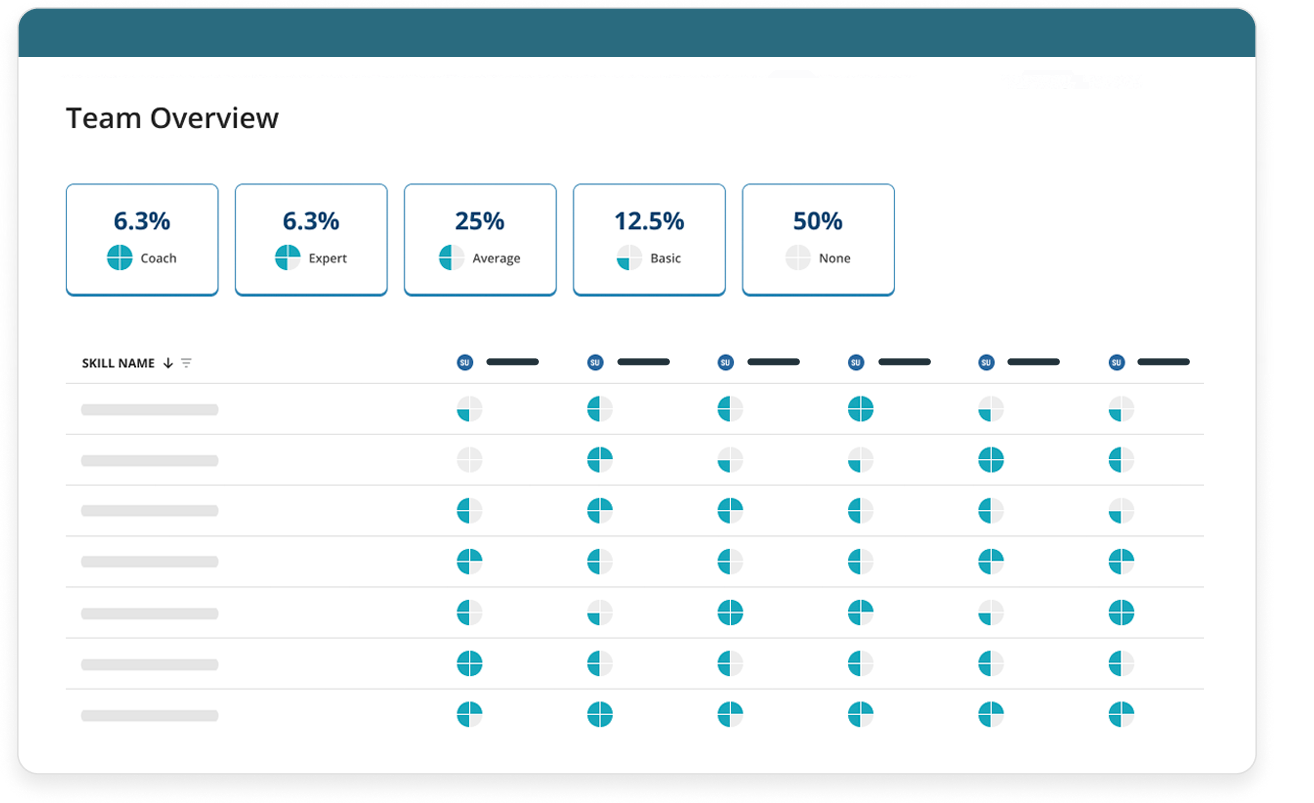
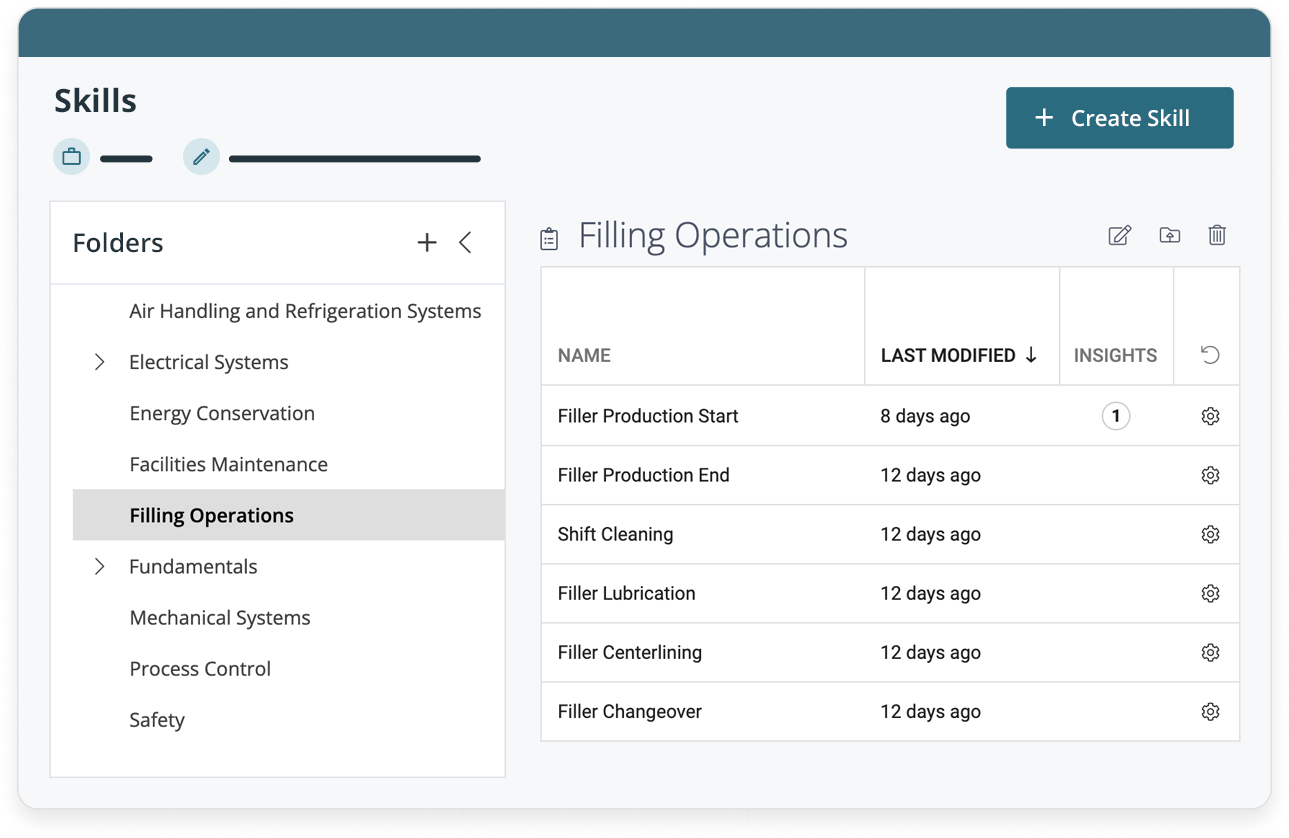
A great way to outline worker skills is through a skills matrix, which digitizes and helps accurately track skills across your organization. This can help identify any skills gaps that exist in current departments.

skills matrix

Step 2: Access skills needed for the future.

After assessing current employee skills, it’s time to identify any skills needed for the future. Keep in mind that these must align with any changes expected to occur in the manufacturing industry or in your long-term business plan.

Step 3: Create upskilling goals.

Set employee-specific goals. For example, you may want each worker to take training courses to hone job-specific skills.

Step 4: Match workers with new learning opportunities.

Workers can develop skills through new learning opportunities. It’s important to offer training and development opportunities that help workers grow and foster their skills.

Step 5: Monitor progress.

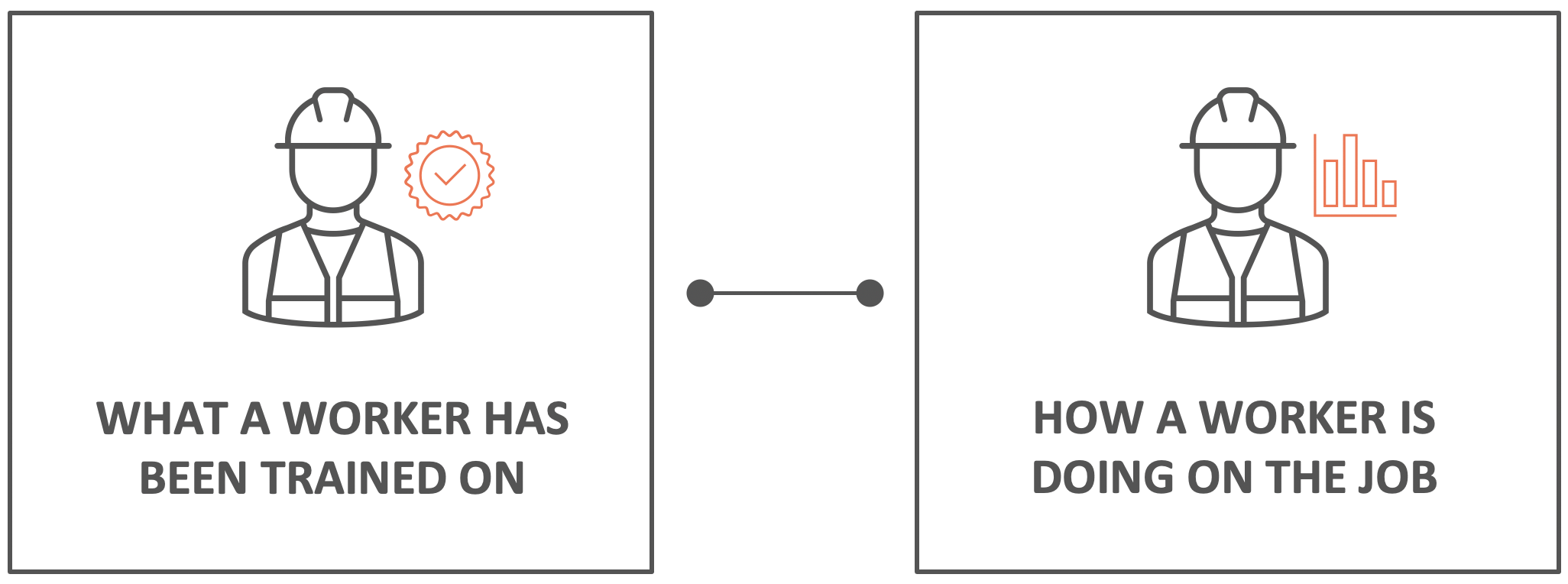
By this stage, you should have mapped employee skills and outlined which ones are needed. It’s important to monitor any progress made. Organizations that digitally track employee skills can map “what the worker has been trained on” to actual job performance (“how the worker is doing”) to create a true representation of proficiency gaps and upskilling opportunities.

skills job proficiency mapping

How to reskill manufacturing workers

If you’re looking to reskill manufacturing workers, consider the following steps below:

Step 1: Identify what skills need cultivating.

Pinpoint which skills are the most valuable and create training programs to train workers on those skills. Think about which new roles need to be created.

Step 2: Integrate upskilling.

It’s vital to start training employees and offering resources to advance skills. For example, training your workers on how to operate digital tools or a specific piece of equipment can help them take advantage of promotion opportunities down the line.

skills job proficiency mapping

Step 3: Customize learning plan.

Develop a plan of core learning opportunities for any skillsets that are needed now or in the future. For example, you can customize learning plans to specific roles.

Step 4: Test and adjust.

Developing a perfect reskilling plan on the first try is no small feat. Be willing to acknowledge any mistakes and fix them.

Step 5: Invest in budget.

Allocating enough financial resources for reskilling employees is vital to company growth. Modify your budget to make reskilling a priority.

Benefits of upskilling and reskilling manufacturing employees

Workplace roles are changing and expanding in the age of automation. This change can bring about skill gaps that need to be filled for a business to stay ahead of the curve.

Upskilling and reskilling manufacturing employees has a number of long-term benefits for employers, such as:

  • Boosts retention. Investing in your employees’ skills development fosters better relationships. Workers who feel valued are less likely to leave. Improving retention can save businesses money on hiring and training new workers.
  • Improves morale. Businesses that offer training and development opportunities help their workers grow and move forward in the company. This can help employees feel like they’re working toward something and not staying stagnant within the company.
  • Improves quality and productivity. Beyond retention and morale improvement, upskilling and reskilling can have production benefits. A more skilled and trained workforce can result in improved quality, productivity, and efficiency throughout your organization.

Looking to improve upskilling and reskilling within your organization?

Augmentir’s suite of smart connected worker tools helps manufacturing organizations create a more skilled and productive workforce. Find out how our software can make it easier to reskill and upskill manufacturing workers in your organization. If you’d like a demo, let us know and we’ll be in touch.

Smart Skills Management software is helping manufacturers bridge the gap between training, skills, and work to build a more resilient and agile workforce.

Skills management and tracking software helps manufacturers identify and track employee expertise. You can map skills from a centralized library to individual workers, analyze the performance of your teams, and fill any skill gaps that exist.

These smart insights can help businesses improve their talent management strategy, including training and development programs and recruiting opportunities.

If you’re interested in learning how to find the best skills tracking software, explore this article as we cover:

  • Benefits of skill management and tracking software
  • What to look for in tracking software
  • FAQs about skills tracking and management tools
  • Why Augmentir

Benefits of skills tracking and management software

Skills management involves identifying workers’ expertise and experience to determine whether they’re a right fit for a role, which areas need improvement, and how to best facilitate learning opportunities. A reliable skills tracking and management software solution lets you keep track of what your employees can and can’t do, and integrates that information with the actual work being done.

Here are a few reasons why you should invest in a tracking tool:

Enhanced training and development programs: Improve employee engagement by making sure courses and training opportunities are relevant to the jobs they perform. Management software makes it easier to assign employee courses that are appropriate and timely, and then track each individual’s training progress.

A more productive workforce: Employees who have access to training resources can further develop their skills to better perform assigned job duties and maximize output. This will empower workers to strive for continuous improvement and grow in their roles.

Improved retention: Offering continuous development and training programs can help your employees feel appreciated and taken care of. In return, they are more likely to stay and do a good job. Considering that turnover rates cost manufacturing firms an overwhelming amount, it’s critical to invest in programs that will improve retention rates.

What to look for in tracking software

Knowing how to effectively track employee skills can be challenging, but the right software can ease the burden. It makes it easier to identify who is lacking which skills and how to best close the gap.

Unfortunately, standalone skills management software solutions that attempt to automate skills tracking fall short of meeting the needs of today’s manufacturers because they do not connect the “skills that workers know” with the “work being done”. These standalone skills management solutions may have been ideal for the stable, unchanging workforce of the past, but they are not suited for today’s era of high workforce variability.

Skills management solutions that combine skills tracking capabilities with connected worker technology and on-the-job digital guidance can deliver significant additional value. Data from actual work performance can inform workforce development investments allowing you to target your training, reskilling, and upskilling efforts where they have the largest impact.

When looking for the best skill management and tracking software, its critical to make sure it can:

  • Keep a centralized database of competencies
  • Pinpoint worker skill gaps
  • Let management look for employees with specific expertise
  • Track the skills of individual employees in a centralized database
  • Intelligently assign work based on true worker skills and competencies
  • Personalize on-the-job guidance based on worker skills and experience
  • Create reports or dashboards to study competencies and skill gaps across departments

AI-powered software enables managers to filter through employee databases by skill to assemble teams best suited for a project.


skills tracking software


Skill management solutions should also integrate with core human resources software to offer seamless sharing of employee data. Some tools may even work in tandem with corporate learning management systems to provide access to educational content that could help workers develop new abilities.

Lastly, HR can use skill management software to make it easier to follow compliance regulations that require evidence of employee capabilities or certifications. For example, a health manufacturing facility may need workers to upload certain certifications to show proof of compliance.

FAQs about skills tracking and management tools

How do you keep track of employee skills?

You can track employee skills using software that manages worker competencies. These programs should allow you to build customized job profiles, create reports to study competencies, and fill skill gaps.

What is skills software?

Skills software is a tool that helps manage and keep track of worker expertise and experience. It’s used by businesses to optimize job performance and boost worker productivity.

Should I invest in skills tracking software?

Manufacturing facilities can benefit from investing in software that provides an easy-to-use centralized database of worker profiles, training resources, and much more.

Why Augmentir

Augmentir can help manage the skills of your workforce with its AI-powered connected worker solution. Our skills management tools create visibility at all times to optimize training programs, track individual and team progress, and initiate more targeted training. Check out our live demo.


Learn how Smart Skills Management software is helping manufacturers bridge the gap between training, skills, and work to build a more resilient and agile workforce.

Download our latest eBook – The Future of Work: Connecting Skills Management with Standard Work.


Augmentir’s take on the trending Workforce Institute’s staggering survey numbers.

Do you remember when offshoring–the outsourcing of production internationally–was once considered the “gold standard” for manufacturers because of reduced costs? Funny how things change. We can partly thank the global pandemic for this. Reshoring, also referred to as ‘onshoring’, in manufacturing is now the way to go–the apparent panacea to supply chain disruptions and a healthier economy. This should have manufacturers cheering and dancing in the streets, right? Not so fast. We’ve also got a massive labor shortage to deal with. But don’t fret. There are solutions to be found, and they happen to exist in software tools already being embraced by organizations on their journey to digital transformation.

The perks and pressures of onshoring in manufacturing

If your organization isn’t already thinking about onshoring its operations, maybe you should be. Onshoring in manufacturing means greater resiliency, agility, and sustainability by shortening the distances between process and delivery. Less travel means reduced emissions and adherence to ESG standards. Reshoring addresses issues associated with shipping costs, lead times, and new regulations. Working in familiar markets can help identify supply and demand trends more accurately. National employment rates are likely to increase when hiring residents and working with other domestic business partners.

But labor shortages and the variability of today’s workforce have not made reshoring an easy shift. So while there is tremendous opportunity to bring production home, the lack of affordable and skilled labor is having a tremendous impact on our domestic production capacity.

Here’s how you make onshoring work for you. First, stop thinking the old way of recruiting, training, and retaining workers will still work today.

Work with what you’ve got

What’s wrong with training today? Yes, training programs can help improve worker knowledge and skills development. But only if they are meeting the unique needs of individual workers with content-rich, high-impact learning and hands-on training programs. Forget those standard training programs–they are useless in the face of the variable workforce we have available today. The workers you can find are showing up with a mixed bag of experience and skills. That doesn’t have to be a disadvantage anymore. Because there is a smarter way to train and optimize the skills of each of those workers to meet productivity goals individually and fulfill the potential for your organization’s production capacity.

Smart digitization is the ticket to effective onboarding, training, and more–from hire to retire

“The secret of change is to focus all your energy not on fighting the old, but on building the new.” – Socrates

This new era of workforce instability is forcing manufacturers to change. It’s forcing them to turn to digital technology and look at smarter ways to hire, onboard, train, and retain their workers. At Augmentir, we call this Smart Digitization.

What do we mean by ‘smart’ digitization? Smart digitization involves adopting modern, digital tools, mobile technology, and supporting workers throughout their entire lifecycle.

smart digitization throughout worker lifecycle


Modern connected worker tools are at the core of the solution that supports workers throughout their employment, from training to troubleshooting in real-time to ongoing learning and development. If you look at the entire employee lifecycle, this means:

  1. Using software tools to digitize and automate onboarding and skills tracking to help get workers operational faster, regardless of their skill and experience.
  2. Once on the job, digitizing and personalizing work instructions based on the individual needs of the worker – whether they are a novice worker or an expert.
  3. Proving instant access to support, within the flow of work.
  4. And finally, using an AI-based system to analyze how workers are performing on the job, and intelligently targeting upskilling and reskilling based on actual work performance.

Workers have access to a suite of digital tools and knowledge resources at their fingertips – digital work instructions, collaboration, and support tools to guide them on the job and quickly problem-solve complex tasks, allowing them to do their personal best.

For employers, this means not only more engaged and collaborative workers, it also means deeper insights into work performance that can help drive continuous improvement efforts.

skills job proficiency mapping

AI-based smart insights intelligently optimize workers’ performance by identifying and tracking their skills in real-time. Smart insights pull from these performance metrics and learn to prompt workers who need new training programs or work opportunities, continuously upskilling and reskilling.

It’s the advanced medicine needed to maximize productivity and operational health.

So as you plan to bring more of your production back home, make sure you’re ready to seize the opportunity and address the challenges of a restricted labor market at the same time.


Find out how and why so many manufacturers are turning to Augmentir to turn their workers into efficient, productive, and long-term assets for their businesses.

Check out our latest webinar – Smart Digitization of Frontline Workers to learn more.


AI and connected worker technology is helping frontline managers combat employee burnout and improve engagement and retention.

In today’s fast-paced manufacturing industry, staying ahead of the curve is critical to success. To remain competitive, companies must continuously reskill and upskill their workforce. One way to achieve this is to operationalize training and bring it closer to the factory floor using artificial intelligence (AI) and connected worker technology. Operationalizing training means taking a more systematic approach to training and workforce development, rather than treating it as a one-time event.

operationalizing learning

According to a report by McKinsey, companies that embrace AI-powered learning reduced training time by up to 50% and improved learning outcomes by up to 60%.

AI-powered solutions make learning more accessible, engaging, and effective; and by integrating training and learning solutions into the everyday operations of the company, manufacturers can create a culture of continuous learning and improvement. In fact, here at Augmentir we’ve seen manufacturing companies use this approach to reduce new-hire onboarding and training time by up to 72%.

Learning: When and Where it’s Needed

AI has the potential to revolutionize many industries, and manufacturing is no exception. Many workers in the manufacturing industry work in shift-based environments, making it difficult for them to attend traditional classroom-based training sessions.

With AI, organizations can incorporate more learning processes into the everyday workday of frontline workers – essentially operationalizing training and bridging the gap between knowing and doing. This “active learning” aligns with the Pyramid of Learning visual model that illustrates the different stages of learning and their relative effectiveness.

pyramid of learning

Active learning involves the learner actively engaging with the material, often through problem-solving, discussion, or application of the knowledge while they are on the job.

In general, active learning (or workflow learning) is considered more effective than passive learning in promoting deep understanding and retention of information. Therefore, learning leaders often strive to design learning experiences that involve higher levels of active learning, moving beyond the lower levels of the pyramid and promoting critical thinking, creativity, and problem-solving skills.

This approach can be implemented with mobile learning solutions that leverage connected worker technology and AI to provide workers with bite-sized, on-demand training modules that they can access on smartphones or tablets. These modules can be customized to each worker’s skill level, making it easier for them to learn at their own pace.

Additionally, AI-driven learning solutions offer:

  • Personalized Learning: AI-powered learning solutions can be customized to each worker’s skill level, making it easier for them to not only learn at their own pace, but also matched to their experience level. For example, novice workers may be required to watch a micro-learning video as a safety prerequisite to performing a task, whereas a more senior worker with the appropriate level of job experience and proficiency may not be required to watch the learning video.
  • Performance-based Learning: AI-powered solutions provide workers with hands-on learning experiences that are customized based on their actual job performance. These experiences can be delivered through a variety of content mediums – rich media, self-help guides, microlearning videos, and even augmented reality (AR) experiences.
  • Real-Time Feedback: AI-powered solutions can monitor worker performance in real-time, providing instant feedback to help workers improve to provide access to content to help resolve issues in the flow of work.

AI can also help with the assessment of employee performance. Traditional performance evaluations often rely on subjective assessments from managers. Conversely, AI-powered performance evaluations can provide a more objective and data-driven assessment of employee performance, while also providing a more accurate picture of an employee’s strengths and weaknesses.

Better Training, Better Work

By implementing AI-based solutions, companies can identify and operationalize training needs across the organization. Using performance data, AI can uncover gaps in knowledge or skills across the workforce, which can then be used to develop targeted training programs to “fill” these gaps.

Once implemented, AI can be used to effectively track and improve learning and training effectiveness, leveraging data on worker performance before and after training to measure impact and refine training programs to ensure that they are delivering the best outcome.

As the manufacturing industry continues to evolve, so must how they approach learning solutions. A recent Deloitte survey found that over 90% of companies believe that AI-powered learning will be important for their organization’s success in the next three years. AI has the potential to operationalize training and transform learning in the manufacturing industry by bringing it closer to the factory floor. By leveraging AI-powered personalized learning, real-time feedback, data-driven performance evaluations, and identifying training needs, industrial organizations can create a more efficient, effective workforce.