Posts

Learn about what a skills matrix is, how these can be used and alternatives to help track employee skills.

A skills matrix is a grid that maps employees’ skills and qualifications. Companies use this information to manage, plan, and monitor current and desired skills for a position, team, department, or project.

Having a place to store each employee’s skills and experience level can help managers decide how to divvy up tasks. It’s also a great way to gauge areas of improvement.

A skills matrix is usually managed using a spreadsheet, but there are alternatives to skill matrices. For example, cloud-based skills management software can help identify and track employee competence and correlate it with actual job performance. The software can also help managers filter employee databases by skills to assemble teams or assign work based on specific qualifications.

skills matrix

To help you learn more about the skills matrix and its alternative, this article explores the following topics:

What is a skills matrix?

A skills matrix is a tool used by employers to track workers’ skills and expertise. Typically maintained in spreadsheet format, it usually includes skills that workers already possess, ones that are needed but underdeveloped, and those that are required to complete a project or perform a job function.

Each employee is given a rating on their proficiency in each skill and their interest in developing it. This gives managers great insight into who is qualified to complete certain tasks.

What are the benefits of using a matrix to track employee skills?

A skills matrix offers multiple benefits that can increase team performance and boost productivity. Some of its benefits include:

1) Brings awareness to employee skills

This tool shows what area a team member excels at and where they can improve. This can bring awareness to what skills need to be cultivated and what areas team members are already proficient in.

2) Sets team expectations

With the matrix outlining what skills are needed to complete a project, employees have a better idea of what’s expected and required to be proficient in their roles.

3) Shows where new hires are needed

The matrix gives employers a better idea if someone needs to be hired to fulfill a certain role. Knowing which skills are missing helps managers determine what kind of employee needs to be hired for a specific project.

How do I create a skills matrix?

Creating a skill matrix can provide a wealth of benefits to a business. You can set one up by following the steps below:

  1. Determine which skills are needed for your team based on job function or responsibility.
  2. Evaluate your workers’ skills and qualifications.
  3. Create a grading system to rate each employee’s current skill level.
  4. Fill in the missing criteria and manage the information in a central skills management system.

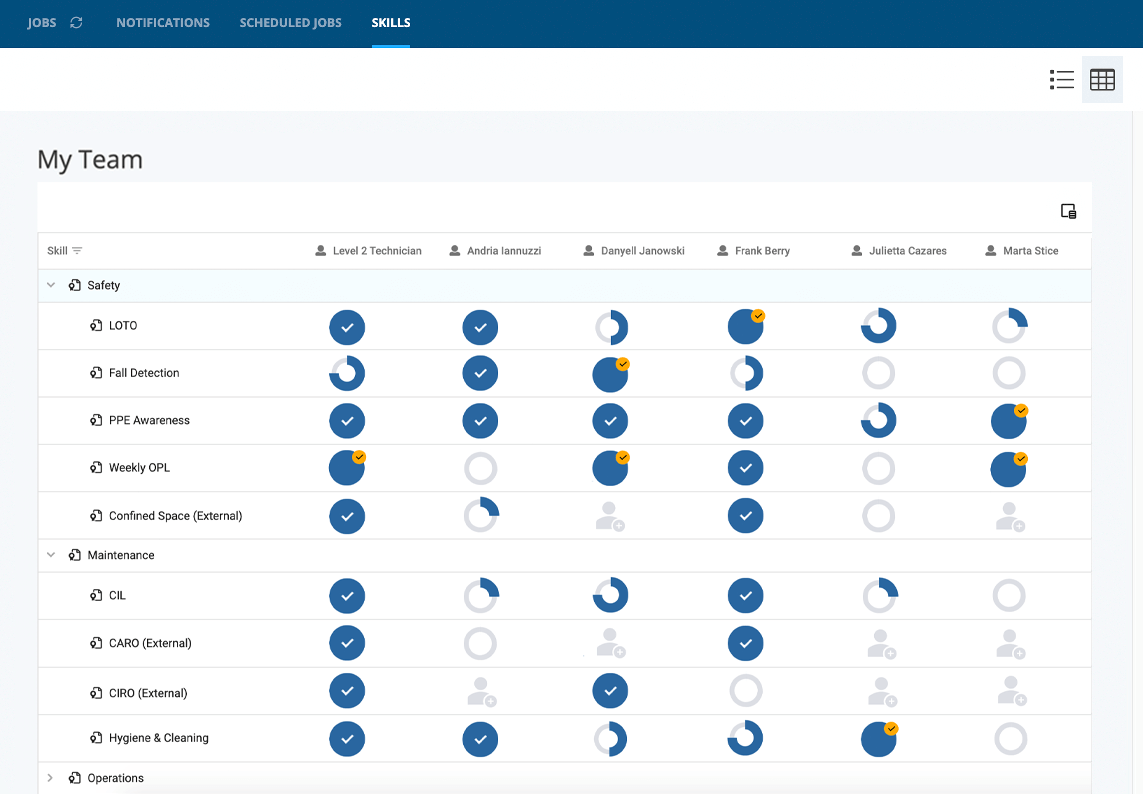
skills matrix for skills management

How can skills matrices be used in the manufacturing industry?

The manufacturing industry is always seeking skilled employees. Skilled matrices are an excellent way to cultivate the skills of current production plant workers and boost productivity.

This organizational tool also simplifies the hiring process. For example, it gives managers a better sense of what skill areas are lacking and who may be the right fit for the role.

The better equipped an employee is to do their job, the better a company’s bottom line will be.

What are the alternatives to using a spreadsheet for your skills and competency matrix?

If you’re looking for an alternative to using a spreadsheet to manage the skills of your team, consider cloud-based skills management software. These programs help businesses identify and track worker competency.

For example, this software maps skills from a centralized library to job profiles and individual employees to help managers analyze the abilities of their teams, the desired skills for each role and any skill gaps that exist. Learn more about skills management software in our guide.

Furthermore, skills management software not only allows you to efficiently manage skills for your frontline workers, it also enables you to use this skills mapping to intelligently assign work or identify upskilling or reskilling needs.
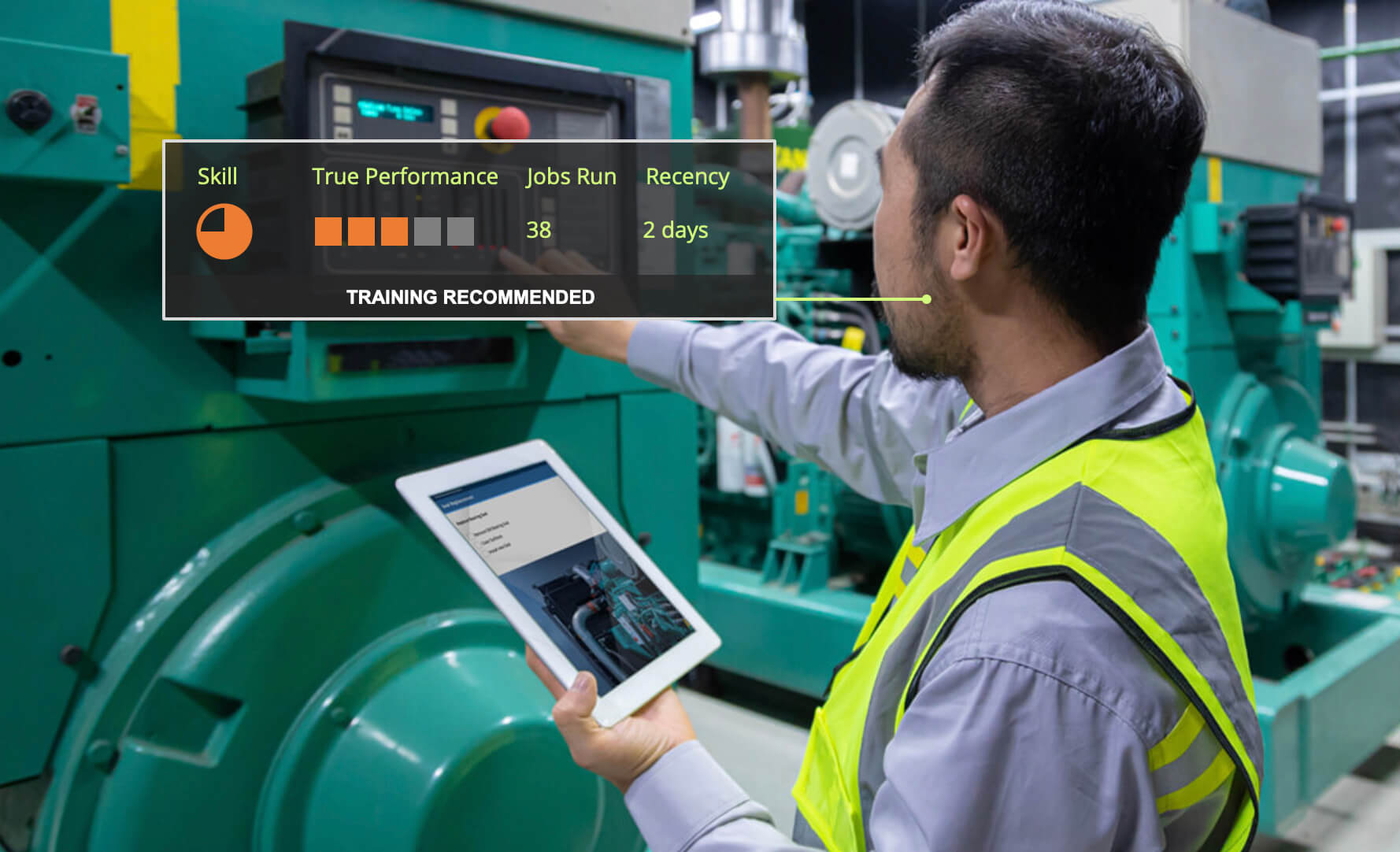
skills job proficiency mapping


Interested in learning how Augmentir’s connected worker platform can help you digitize and effectively manage skills within your manufacturing operation? Get in touch with us for a free demo.


Learn about the best practices for optimal asset maintenance performance and how to track your assets to ensure that everything is in working condition.

Asset maintenance refers to everything that goes into keeping your manufacturing assets in tip-top shape. With machinery, for example, asset maintenance means conducting frequent inspections and repairs. With office space, this term involves maintaining a clean, safe, and productive workplace. With products, it includes checking finished goods for any deficiencies or errors.

In a nutshell, asset maintenance helps prolong the performance and lifespan of equipment, machinery, goods, and more. Performing this strategy ensures that your essential business resources continue functioning smoothly and properly.

Learn the best practices for increasing asset maintenance performance:

Best practices for optimal asset maintenance performance

Implementing key best practices can improve asset maintenance in manufacturing. We’ve put together five crucial strategies to ensure your manufacturing firm is performing at its best while minimizing costs:

1. Gather as much info as possible

Gathering data on assets can help management make better informed production decisions. Asset tracking is a great technique to accomplish this.

2. Create a preventive maintenance schedule

The data that’s been collected will make it easier to create a preventive maintenance schedule. To create one, start by organizing asset data and analyzing the info you’ve amassed (e.g., how often each item must be checked and maintained). Lastly, prioritize your most important assets and allocate funds to maintain them.

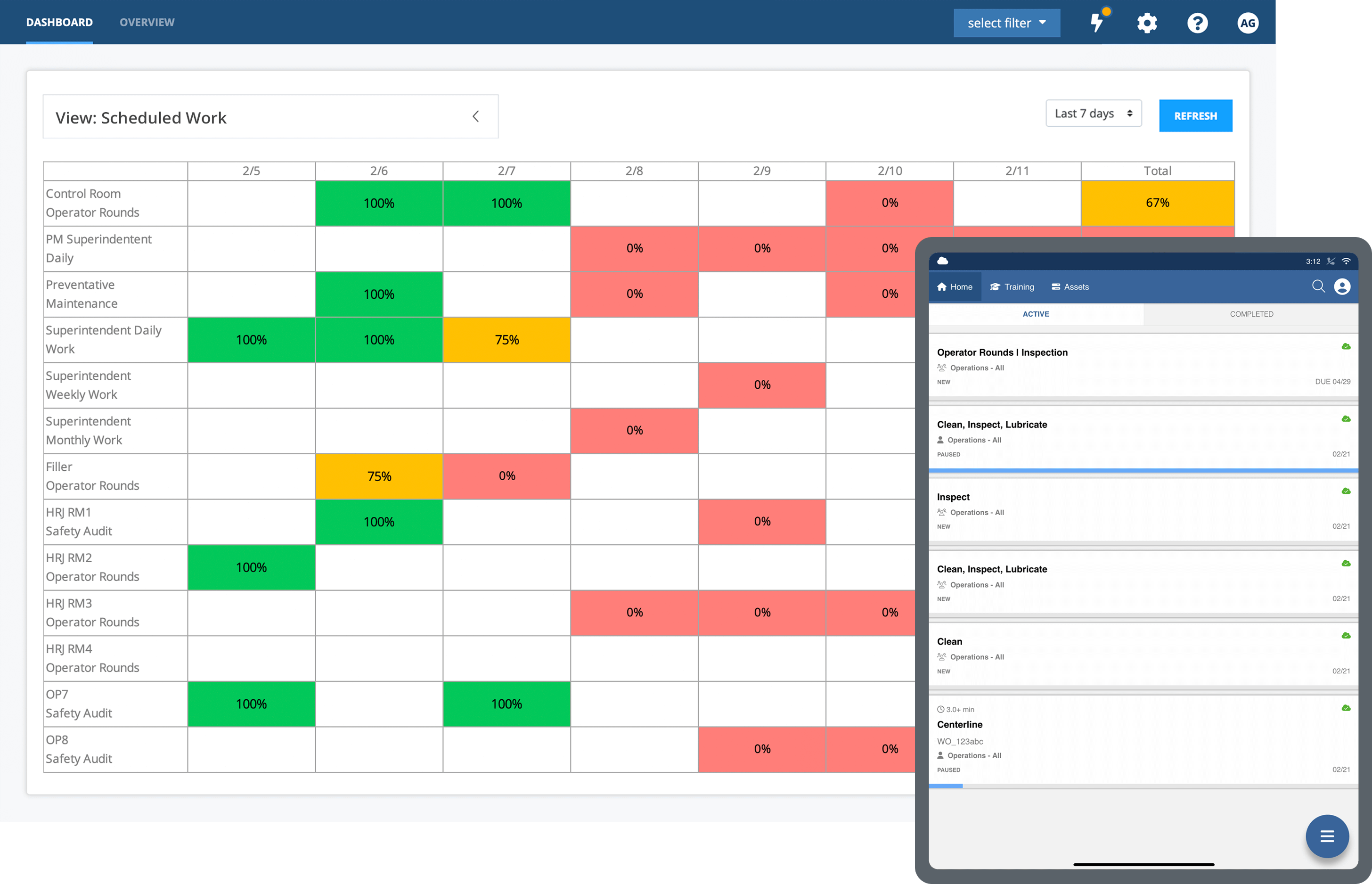
schedule and audit asset maintenance work

3. Train workers

Investing in your employees pays off. Procedural documentation and training will help ensure that all maintenance work is thoroughly performed and recorded. Skills management software can help with ongoing management and tracking of employee skills and training requirements.

4. Apply an inventory tracking system

There is nothing worse than beginning a project only to find out that you don’t have all the moving parts to complete it. An inventory system helps reduce the chances of missing crucial product information and enables you to better track company assets.

5. Track asset maintenance key performance indicators (KPIs)

KPIs such as mean time between failures (MTBF), overall equipment effectiveness (OEE), and work order resolution time can give a performance review on how well your assets are doing. They’re also great at pinpointing which areas could benefit from predictive maintenance, the process of checking for deficiencies to avoid future machine breakdowns.

Pro Tip

Asset management software like Augmentir’s Connected Worker Solution helps you simplify the operations and maintenance of your facility. Manage work and maintenance procedures, skill requirements, training, KPIs, and preventive maintenance schedules all through a visual interface. Connected worker solutions help integrate your CMMS with your shop floor operations.

A

Advantages of asset maintenance

The maintenance of assets in manufacturing consists of regularly inspecting, repairing, and replacing equipment and other assets to confirm that everything is in workable condition.

Advantages of asset maintenance:

  • Enhanced workplace safety
  • Greater equipment reliability
  • Longer machine lifespan
  • Lower maintenance costs
  • Improved productivity
  • Better regulatory compliance

Asset maintenance tools and how Augmentir can help

Manufacturers are encouraged to manage and track assets to limit product flaws, prevent machine failure, and improve overall productivity. However, in today’s digital age, especially with more mobile devices, complex cloud-based technologies, and software updates, handling assets has become much more complicated.

This is where Augmentir’s AI-powered connected worker solution, or asset management software, comes in. Our solution allows manufacturing facilities to better monitor their assets and manage them effectively with easy-to-use customizable dashboards and real-time insights.

Asset maintenance with Augmentir

Ours is the world’s only connected worker suite that provides an overarching view of an asset’s life cycle. Accurate digital asset records can help manufacturers with resource planning. In addition, our tool helps with asset record keeping so that you don’t have to worry about not meeting regulatory compliance requirements.

Though a manufacturing firm could use a spreadsheet to track its assets, our digital solution gives workers the ability to evaluate asset-specific data and make better decisions about how to manage each one.

Transform how your company runs its maintenance operations. Request a live demo today!


See Augmentir in Action
Get in Touch for a Personalized Demo

AI-powered technology may be the missing puzzle piece for today’s workforce crisis.

Are you still printing work instructions and operating manuals? If so, we need to have a serious chat! Maybe you invested in “going digital” a while back and think your work is done. You’re not alone. It was considered “groundbreaking” when PDF files made their way to the factory floor. 

The first generation of digital work instructions were birthed after learning 46 percent of field technicians claimed paperwork and administrative tasks were the worst part of their day-to-day job. No argument here. Completing and filing paperwork is time-consuming and there is potential for lost information. There was an obvious upside to going digital, except for no longer being able to tell your supervisor that your dog ate your worker performance report. 

But even now that technology is ready for the archives. An estimated $1.3 trillion (and counting!) has been spent on digital transformation initiatives as the online connected workplace and market continue to move at a rapid pace. 

We are no fortune tellers, but studies show that 25 to 31 percent of 3.3. million business service jobs will be automated in the next decade. This doesn’t mean everyone is being replaced by robots. On the contrary. It means technology is improving to help workers do their jobs even better. Manufacturing companies need to be prepared to hop on this next-generation train if they aren’t already.

Move over one-size-fits-all training and work instructions 

The individualized, real-time, connected worker platform is here. Let us emphasize individualized. Connected worker platforms are being implemented in myriad industries, from automotive to food processing. Any industry which is adapting daily to the constant shifts and pressures of the global economy. Regardless of the industry, standard digital work instructions are no longer effective. They do not reflect the real-time changes happening in the operation, such as order fulfilment and materials inventory, or equipment maintenance needs and the capabilities of the workers operating the machines. Imagine working on the manufacturing floor for five years and handed with the same standardized work instructions as the new hire.

Does this make sense? Not anymore. Not when AI-based technology is changing what’s possible. And what’s different about this latest wave of technology that makes it so special? It’s built around optimizing the performance of people (Gasp.)

Change is inevitable. Growth is optional. – John C. Maxwell

A marriage made in heaven–the next generation of workers is ready for a digitally connected workplace

Recruiting and retaining talented workers is one of the greatest challenges facing operations today. We get it. But there’s good news. As one generation of workers readies for retirement, another is stepping up to fill the gap. Gen Z is overflowing with talented innovators in the tech world having grown up surrounded by non-stop advancements and devices. Need one of them to look somebody up in the phone book? Forget it. But need assistance when your home computer suddenly “dies”? These are your people. 

It’s more than video games. Their education has been largely based on a digital foundation. Nearly every function of their daily lives has an element of connectivity to the broader online world. You could say this generation is hardwired to respond best to customized digital learning platforms. It’s their love language. And so the potential to drastically improve productivity is real.

The beauty of the digitally connected worker–could they be “the One”?

The digitally connected worker has all the right stuff for a long-lasting relationship with your operation. The digital training and work instruction platform holds their unique inventory of skills, goals, and performance history, and works with them to become a better version of themselves on the floor. Workers whose individual needs are supported are better, more engaged employees. They have the self-confidence – as well as the tools and specific instructions – to address problems head on when they arise. An investment in AI-powered technology is an investment in a stable, adaptable, and reliable workforce.

Are you and your workforce ready to take this next step in digitization? Contact Augmentir to start the conversation. Together let’s step into the full potential that this generation has to offer to improve your operational efficiency.

Today’s industrial workforce is changing in real-time – who shows up, what their skills are, what jobs they need to do, is a constantly moving target. The traditional “one size fits all” approach to training, guidance, and performance support is fundamentally incapable of enabling today’s workers to function at their individual peak of safety, quality […]

Today’s industrial workforce is changing in real-time – who shows up, what their skills are, what jobs they need to do, is a constantly moving target. The traditional “one size fits all” approach to training, guidance, and performance support is fundamentally incapable of enabling today’s workers to function at their individual peak of safety, quality and productivity.

Watch the recording of our recent virtual roundtable of industry leaders as they discussed proven approaches to delivering performance support and modern training approaches for today’s industrial workforce.