Augmentir’s Chris Kuntz explores how food and beverage manufacturers are moving from traditional Lean to Digital Lean using connected worker technology and real-time data to shift from reactive to proactive operations.
Augmentir’s VP of Strategic Operations, Chris Kuntz, recently published an article in Food Industry Executive outlining how the food and beverage industry is moving beyond traditional Lean manufacturing and what that shift looks like on the plant floor. Here’s a look at the key themes and why they matter for manufacturers navigating today’s operational pressures.
Why Traditional Lean Is Reaching Its Limits
For decades, Lean manufacturing has been the backbone of operational efficiency in food and beverage, built around principles like waste elimination, continuous improvement, and standardized work. And it has delivered real results. But the operating environment has changed significantly.
Today’s food and beverage manufacturers face a much more complex landscape: consumers are demanding more SKUs, shorter product runs, seasonal varieties, and cleaner labels — all at the same time. Regulatory scrutiny around traceability and food safety has intensified. Supply chains are more volatile. And the workforce itself is shifting, with experienced operators retiring and taking decades of institutional knowledge with them.
Against this backdrop, the traditional tools of Lean — paper logs, manual audits, clipboard-based checklists, and end-of-shift reports — are showing their age. By the time data gets reviewed and decisions get made, the opportunity to intervene has often already passed. The problem isn’t the Lean philosophy itself; it’s the infrastructure it’s been running on.
What Is Digital Lean?
Digital Lean takes the core principles of waste reduction, continuous improvement, and standardized work and adds a layer of real-time data, connected worker technology, and AI-driven intelligence that makes those principles far more actionable.
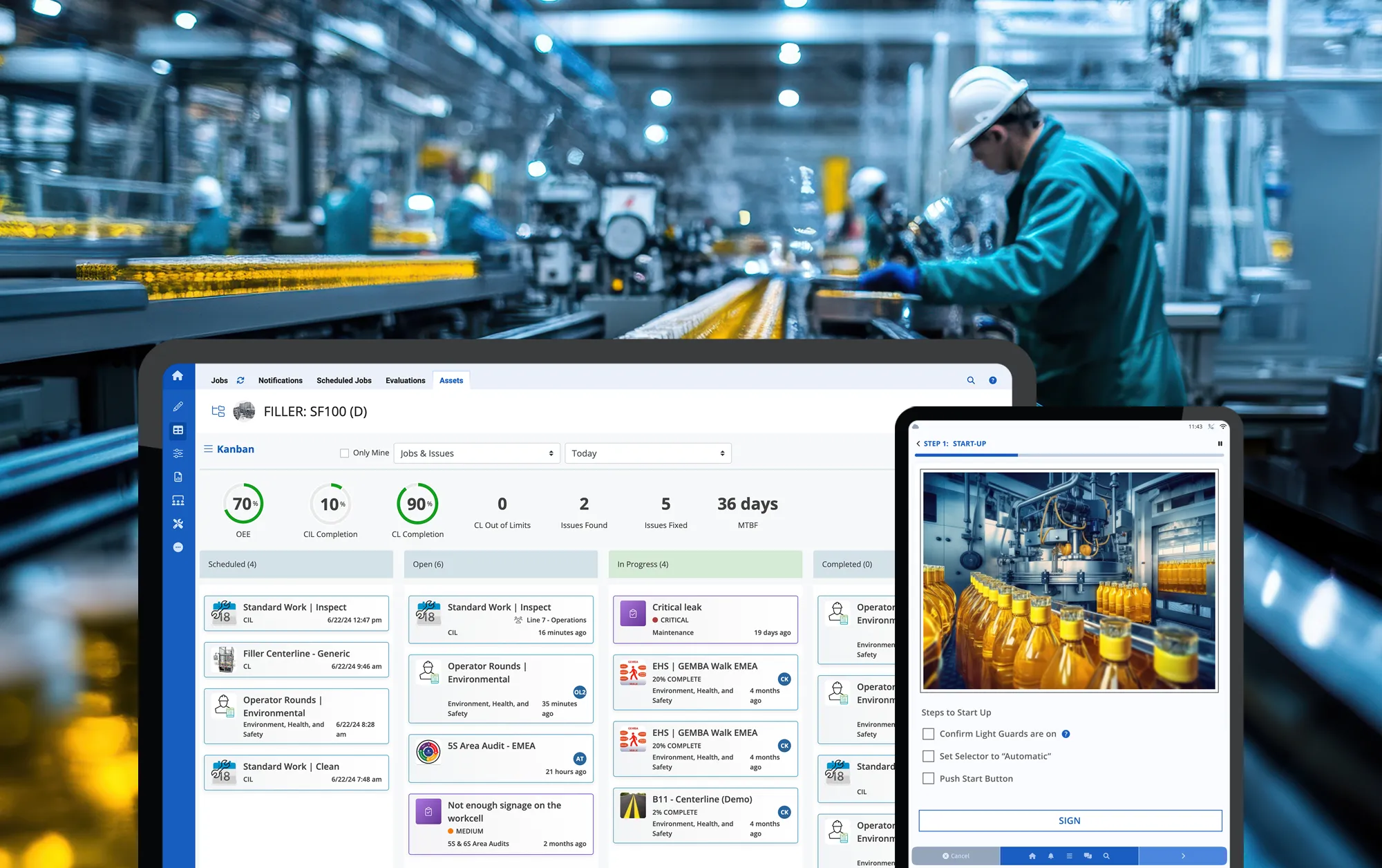
The shift is from retrospective to real-time. Instead of analyzing what went wrong after a shift ends, Digital Lean systems surface problems as they happen and put the right information in front of the right person to act immediately. Instead of relying on the most experienced person on the floor to carry critical process knowledge in their head, adaptive digital work instructions make that knowledge accessible to everyone.
At the center of this model is what Chris Kuntz describes as a “Single Pane of Glass” — a mobile-first, unified platform that integrates with enterprise systems like ERP, breaking down the data silos that have historically separated shop floor operations from business leadership. Frontline workers, supervisors, and executives all gain real-time visibility into the same operational picture, enabling faster, more informed decisions at every level of the organization.
Connected Worker Technology and AI Agents
The technology enabling Digital Lean is a significant departure from legacy systems. Rather than bolt-on software that requires workers to leave the floor to log data, modern connected worker platforms are designed for the frontline. Workers access live data, receive contextual guidance, and log information directly from mobile devices on the line — reducing friction and increasing the accuracy and timeliness of data capture.
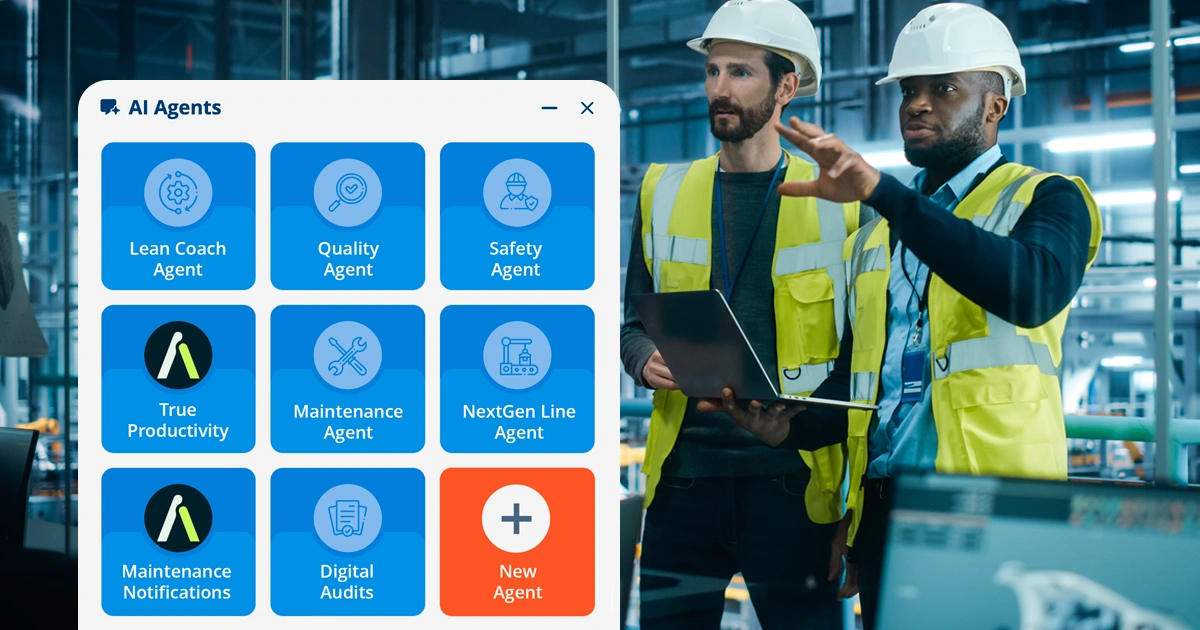
AI agents are taking this a step further by acting as always-available digital assistants on the factory floor. These agents can assist workers with troubleshooting equipment issues, surfacing relevant procedures, analyzing real-time operational data, and even supporting autonomous operations in some contexts. The practical effect is that workers, including newer, less experienced employees, can perform at a higher level because they have intelligent support at their fingertips.
Where Digital Lean Makes an Immediate Impact
Quality and compliance: Food manufacturers operate in one of the most heavily regulated industries in the world, where quality deviations can lead to costly recalls, brand damage, and serious public health consequences. Digital Lean replaces many manual quality checks with automated validation and continuous line monitoring. If a pasteurization temperature drifts out of range or a label misaligns, the system triggers an alert or stops the line — before a defective product moves further down the line. Digital checklists built around Lean initiatives like 5S audits, Gemba walks, and centerline management ensure these processes happen consistently, with a complete digital audit trail that makes regulatory inspections far less stressful.
Equipment maintenance and uptime: Unplanned downtime is one of the most expensive problems in food manufacturing, and it’s often made worse by reactive maintenance practices. Digital Lean enables a more proactive approach through autonomous maintenance workflows, AI-assisted troubleshooting, and real-time equipment monitoring. When an issue is detected, workers have immediate access to the right diagnostic information and repair procedures, reducing the time from problem identification to resolution. Over time, the data captured through these workflows also supports better predictive maintenance — moving from “fix it when it breaks” to “fix it before it breaks.”
Changeover agility: High-mix production environments, where manufacturers run dozens of different SKUs and must execute frequent changeovers, are among the most challenging to manage with traditional Lean tools. A changeover that takes 45 minutes instead of 30 doesn’t just waste time; it compounds across hundreds of runs per year. Digital frameworks address this through skills-based, adaptive work instructions that guide operators through complex changeover procedures step by step, adjusting guidance based on the product being run and the operator’s experience level. This reduces errors, speeds up execution, and critically, decouples performance from tribal knowledge.
The Human Element: Empowering the Frontline
One of the most important, yet sometimes overlooked, aspects of Digital Lean is its impact on frontline workers themselves. Digital transformation in manufacturing often gets framed as a story about technology replacing people. Digital Lean tells a different story.
When operators have mobile access to real-time operational data, they become active participants in continuous improvement rather than passive executors of fixed procedures. Real-time metrics let them spot and respond to issues without waiting for a supervisor. Unified communication tools reduce the frustration of trying to escalate problems through disconnected channels. Workers gain a clearer sense of how their actions affect outcomes, which builds accountability and engagement.
Workforce intelligence capabilities extend this further by identifying where individual workers have skills gaps and where upskilling or reskilling opportunities exist. As the workforce evolves, with more younger, digitally native workers entering the floor alongside veterans, these tools help ensure the organization’s collective capability keeps pace with its operational complexity.
Perhaps most importantly, Digital Lean platforms help capture and institutionalize tribal knowledge. When an experienced operator retires after 25 years, the process insights they’ve accumulated don’t have to leave with them. Digital work instructions, captured troubleshooting guides, and documented best practices turn individual expertise into shared organizational assets.
How Augmentir Enables Digital Lean
For food and beverage manufacturers looking to make the transition from traditional Lean to Digital Lean, Augmentir provides the infrastructure to make it real — on the plant floor.
Augmentir’s platform connects workers, processes, and operational data in one unified system, giving manufacturers the “Single Pane of Glass” visibility that Digital Lean requires. Frontline workers get mobile-first access to digital work instructions, real-time quality checklists, and AI-powered guidance all tailored to the individual based on their skills, experience, and the task at hand. Supervisors and leadership gain live dashboards showing exactly what’s happening on the floor, with the ability to identify and act on issues as they emerge rather than after the fact.
Key capabilities that support the Digital Lean journey include:
AI-powered work instructions: Augmentir’s adaptive, skills-based digital work instructions evolve with each worker. New operators get more detailed step-by-step guidance; experienced workers get streamlined views. This reduces errors during changeovers, onboarding, and complex maintenance tasks, without requiring a Lean expert on every shift.
Connected quality and compliance: Digital checklists and inspection workflows replace paper-based processes with automated, audit-ready documentation. Augmentir supports 5S audits, Gemba walks, centerline management, and other Lean quality initiatives, with built-in validation logic and real-time alerts that keep quality from slipping through the cracks.
AI agents on the factory floor: Augmentir’s AI agents act as on-demand digital coworkers, helping frontline staff troubleshoot equipment issues, surface relevant procedures, and capture operational data in real time. This accelerates issue resolution, reduces reliance on scarce expert knowledge, and keeps lines running.
Workforce intelligence: Augmentir tracks individual worker performance and skill development over time, giving operations leaders the visibility to proactively close capability gaps, optimize labor assignments, and build a more resilient workforce. Tribal knowledge gets captured systematically and turned into shared organizational assets rather than lost when tenured employees leave.
Food and beverage manufacturers working with Augmentir are able to move faster on their Digital Lean initiatives because the platform is designed specifically for manufacturing frontlines.
The Competitive Standard Is Shifting
The food and beverage manufacturers that are pulling ahead aren’t just running leaner operations — they’re running smarter ones. By building on modern connected worker infrastructure, they’re closing the gap between what’s happening on the floor and what leadership can see and act on. They’re responding to market shifts faster, managing quality more consistently, and developing a workforce that improves continuously rather than just maintaining the status quo.
The shift to Digital Lean isn’t about replacing the foundational principles that have made Lean effective for decades. It’s about giving those principles the infrastructure they need to deliver at the speed and scale modern food manufacturing demands.
Read the full article on Food Industry Executive.
Frequently Asked Questions (FAQ)
What is Digital Lean Manufacturing and how is it different from traditional Lean?
Digital Lean Manufacturing combines Lean principles with real-time data, AI, and connected worker technology. Unlike traditional Lean, which relies on paper-based processes and manual reporting, Digital Lean enables real-time visibility, faster decision-making, and continuous improvement on the factory floor.
How can connected worker technology reduce downtime in food manufacturing?
Connected worker technology, like Augmentir, reduces downtime by giving operators instant access to AI-guided troubleshooting, digital maintenance procedures, and real-time equipment information. This helps teams resolve issues faster and supports predictive maintenance efforts.
How does Augmentir support Lean manufacturing in food and beverage?
Augmentir helps food and beverage manufacturers digitize Lean processes such as 5S audits, Gemba walks, centerline management, and changeovers. Its AI-powered connected worker platform provides digital work instructions, automated quality checks, and real-time operational insights to improve efficiency and consistency.
How does Augmentir help food and beverage manufacturers retain triball knowledge?
Augmentir captures tribal knowledge through digital work instructions, troubleshooting workflows, and standardized best practices. This helps manufacturers reduce training time, improve workforce consistency, and preserve critical operational expertise as experienced workers retire.