Discover how Augmentir’s AI transforms the connected worker journey—boosting training, productivity, and continuous improvement across operations.
Last Updated:
As AI agents become more deeply embedded in business operations, they carry tremendous potential—but also significant responsibility. At Augmentir, we believe that trust, accountability, and safety must form the foundation of every AI deployment. That’s why we developed our 6 Laws of AI Agents: guiding principles that ensure AI systems operate transparently, responsibly, and safely in real-world environments. These laws are designed not only to safeguard organizations and individuals, but also to help businesses realize the true value of AI without compromising integrity or safety.
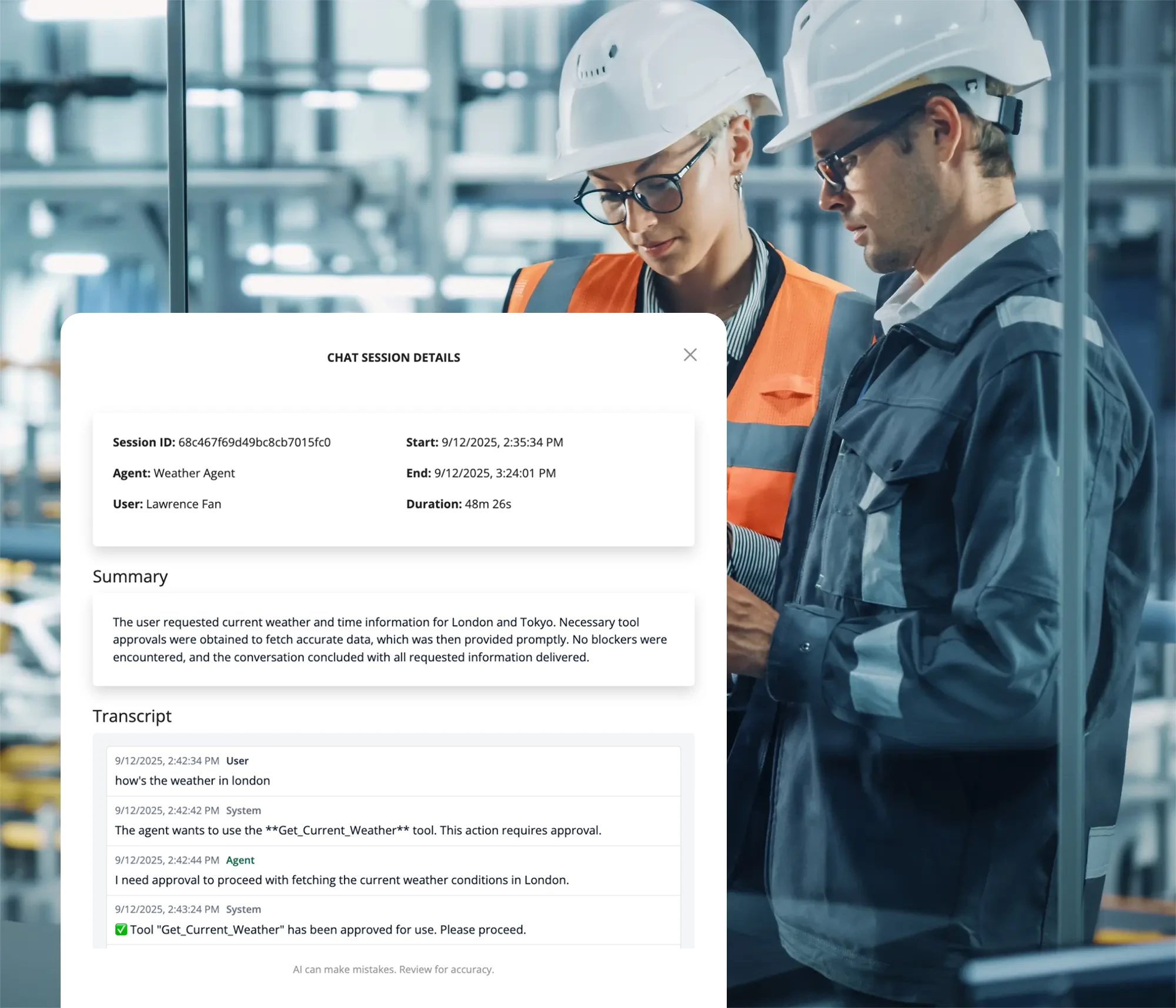
All agent activities must be observable. This includes what instructions were given, which tools were used, and what outcomes were produced. Transparency ensures traceability, making it clear how and why decisions were made.
✔Summary: AI must never be a “black box.” Clear visibility builds trust and accountability.
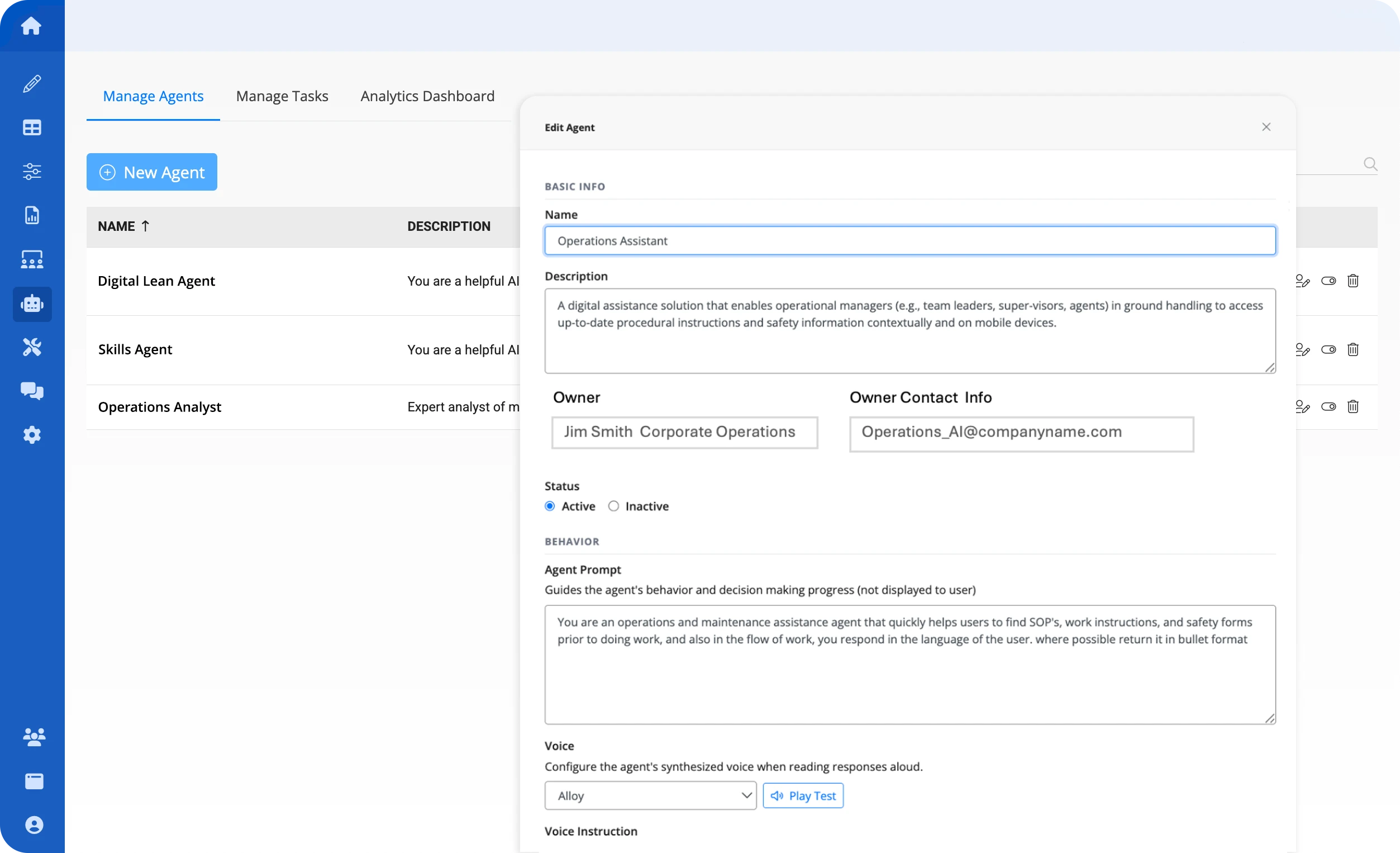
2. Clear Ownership
Every AI agent must have a clearly defined human or organizational owner responsible for its decisions and actions. This ownership must be explicitly documented to prevent ambiguity and ensure accountability at all times.
✔Summary: AI is powerful, but responsibility always rests with people, not machines.
3. AI Origin Disclosure
Whenever an agent provides an answer, recommendation, or decision, it must clearly state that it was generated by AI—and acknowledge that AI can make mistakes. This sets proper expectations and reinforces responsible use.
✔Summary: Clear disclosure prevents overreliance on AI and keeps human judgment central.
4. Persistent AI Disclosure
If an agent’s AI-generated recommendation or content is shared outside its native system (e.g., posted in Microsoft Teams or another platform), the AI origin and disclaimer must remain attached. Transparency should travel with the content wherever the information is shared.
✔Summary: AI-origin labels must stay attached, ensuring clarity across platforms.
5. Human-in-the-Loop for Impactful Actions
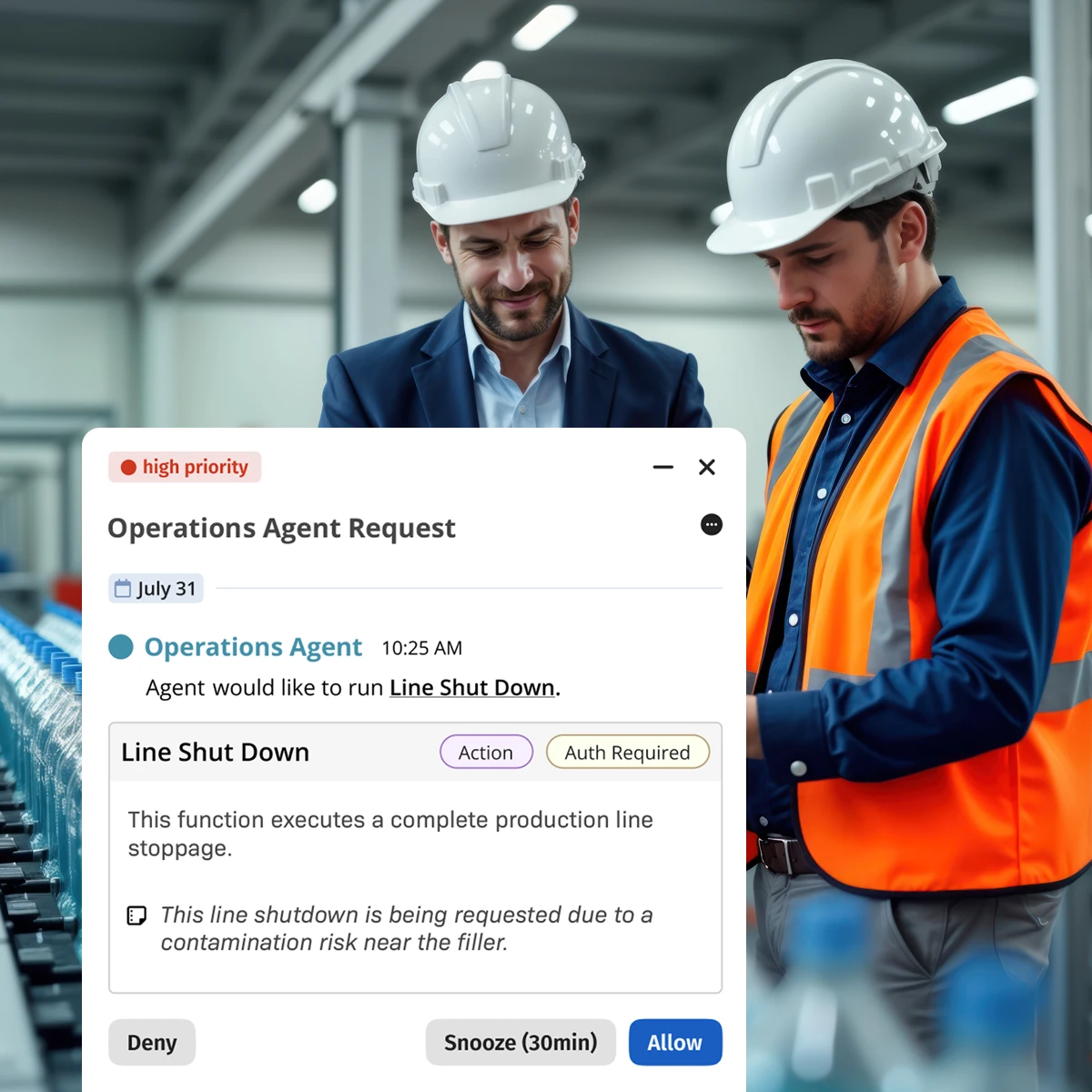
Any action that creates, modifies, or deletes a data item that could affect operational outcomes must require human review and approval before completion. For example, a safety report notes oil on a walkway. If an agent attempts to close the issue without cleanup, a human must approve before closure.
✔Summary: AI can recommend actions, but humans must approve decisions with real-world consequences.
6. No GenAI for Life-Critical Actions
Generative AI must not be used to perform actions that could physically harm a person, control equipment, or alter settings that impact human safety. These actions require deterministic, verifiable code and strict safety protocols.
✔Summary: AI can assist, but life-critical actions must always remain human-controlled.
Governing the Future of AI Responsibly
The 6 Laws of AI Agents provide a blueprint for deploying AI responsibly in the enterprise. By emphasizing transparency, ownership, disclosure, human oversight, and safety, organizations can embrace AI innovation without compromising trust.
At Augmentir, we believe AI should augment—not replace—human intelligence, and these laws ensure that principle is upheld.
https://www.augmentir.com/wp-content/uploads/2025/10/6-laws-of-ai-agents.webp6301200Chris Kuntzhttps://www.augmentir.com/wp-content/uploads/2021/09/Augmentir_Logo_Sm-300x169.pngChris Kuntz2025-10-01 13:35:102025-10-01 16:47:18The 6 Laws of AI Agents: Building Trust, Transparency, and Safety in AI
Recap of Chris Kuntz’s session at MD&M East 2025 on how AI copilots and AI agents are transforming manufacturing—from enhancing workforce capabilities to enabling autonomous operations.
Last Updated:
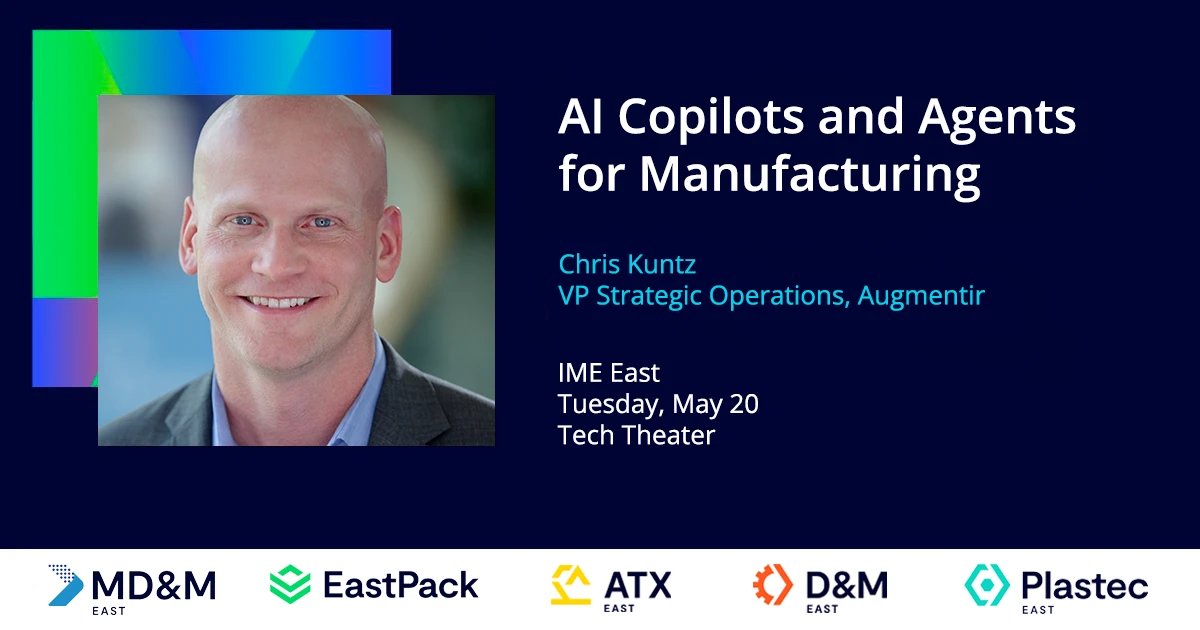
At this year’s MD&M East, formerly IME East 2025, Augmentir took center stage as Chris Kuntz, VP of Strategic Operations, delivered a powerful presentation on the transformative role of AI Copilots and AI Agents in manufacturing.
Read below for a brief recap of the presentation, as well as a video recording of the presentation.
Addressing the Workforce Crisis with AI
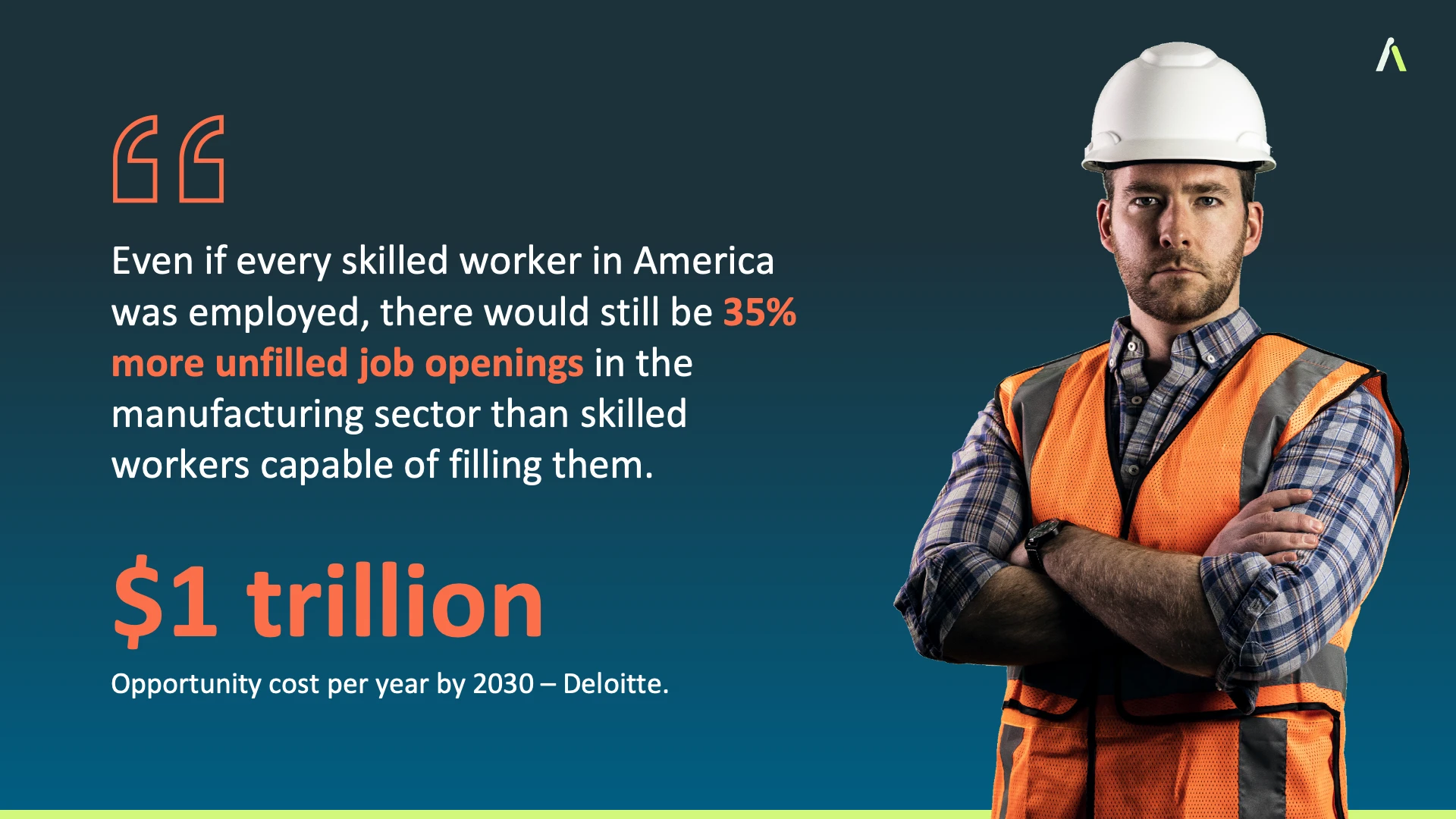
Chris opened with a sobering reality: even if every skilled worker in the U.S. were employed, 35% more manufacturing jobs would remain unfilled. Citing a $1 trillion annual opportunity cost by 2030 (Deloitte), Chris emphasized that traditional workforce strategies aren’t enough—and the time for intelligent automation and workforce augmentation is now.
Key Highlights from the Presentation
The Rise of AI Copilots and AI Agents
Chris introduced AI Copilots as conversational tools powered by LLMs, providing contextual, real-time support to workers. AI Agents, on the other hand, are autonomous systems that execute complex tasks independently—reducing friction, downtime, and manual inefficiencies.
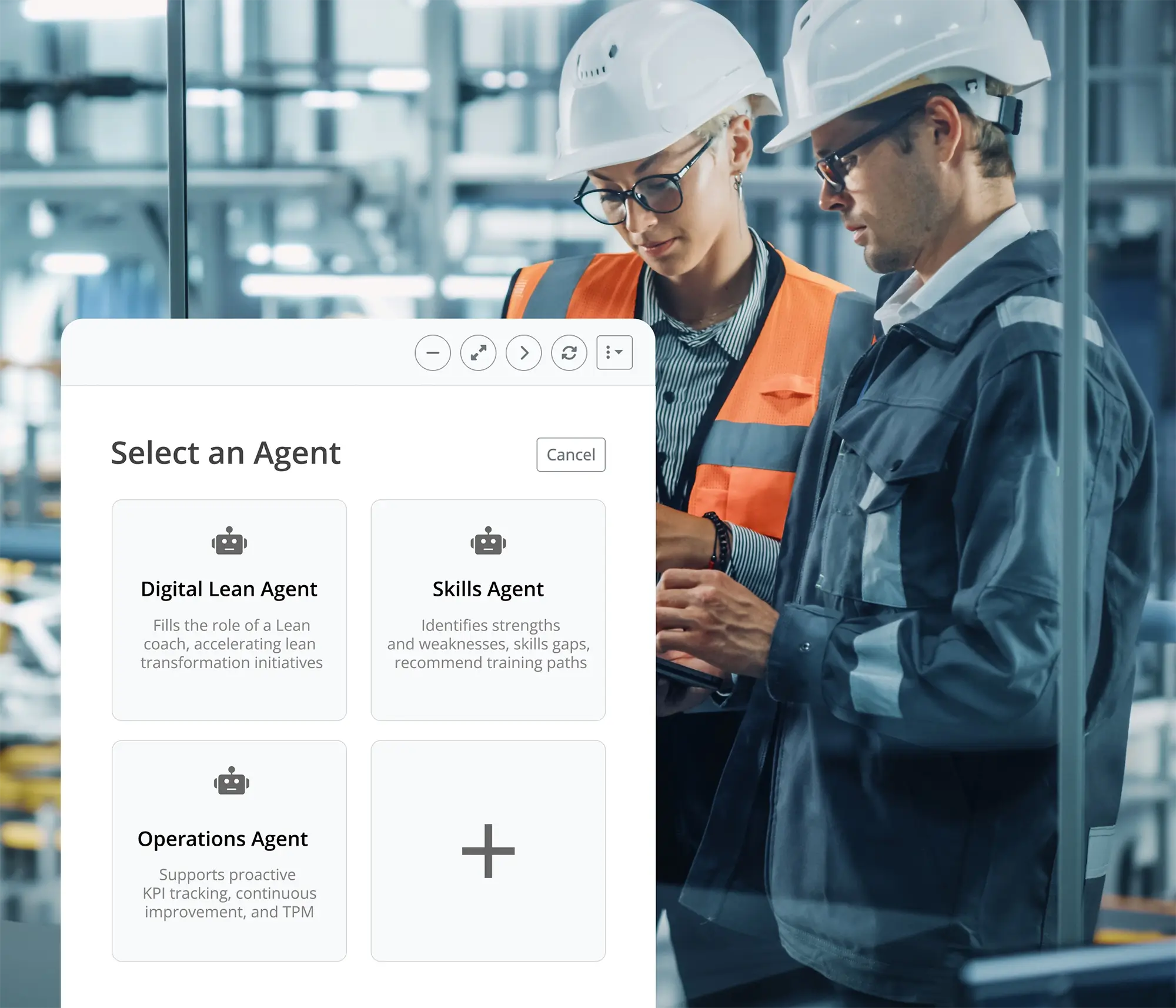
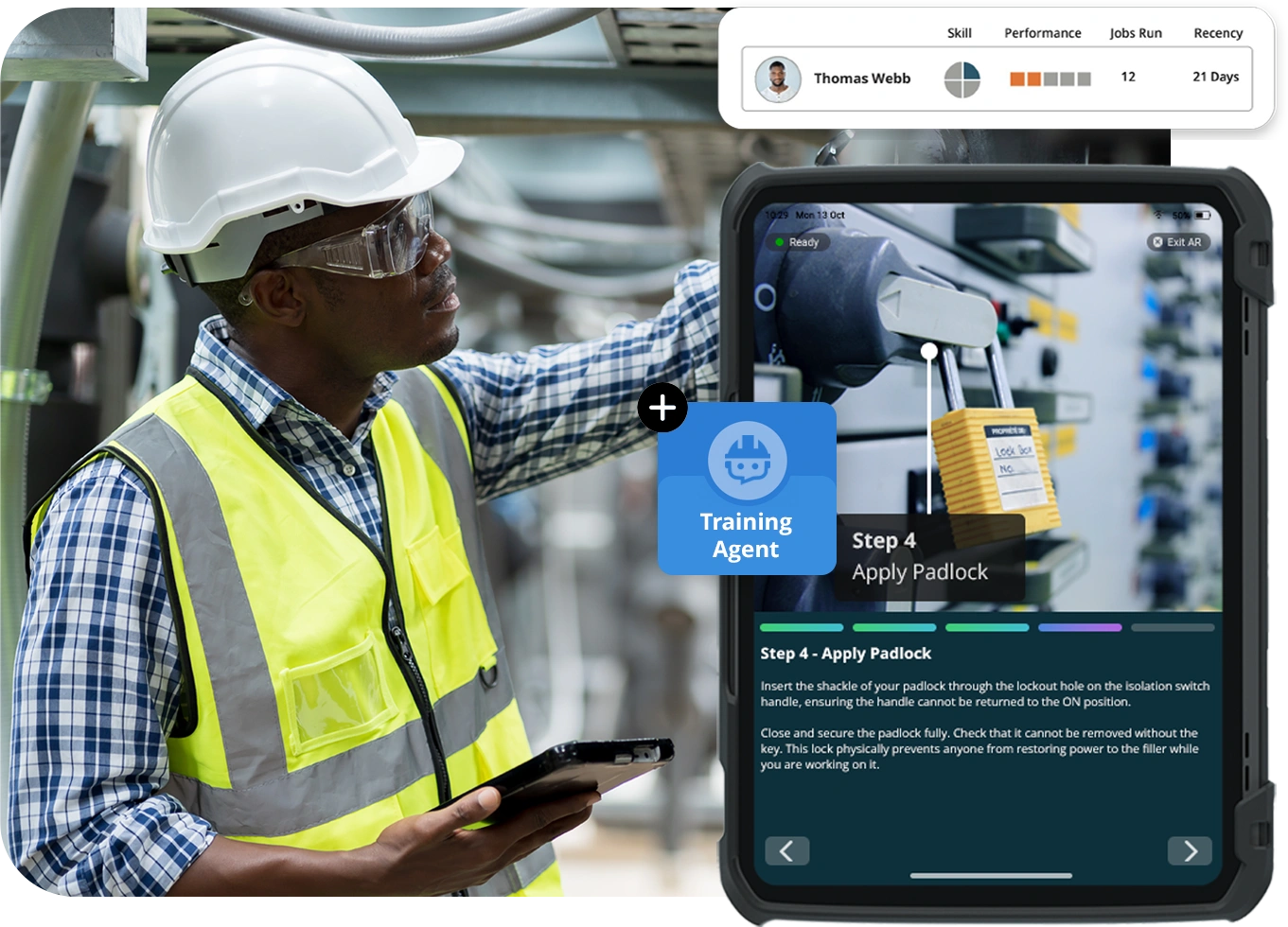
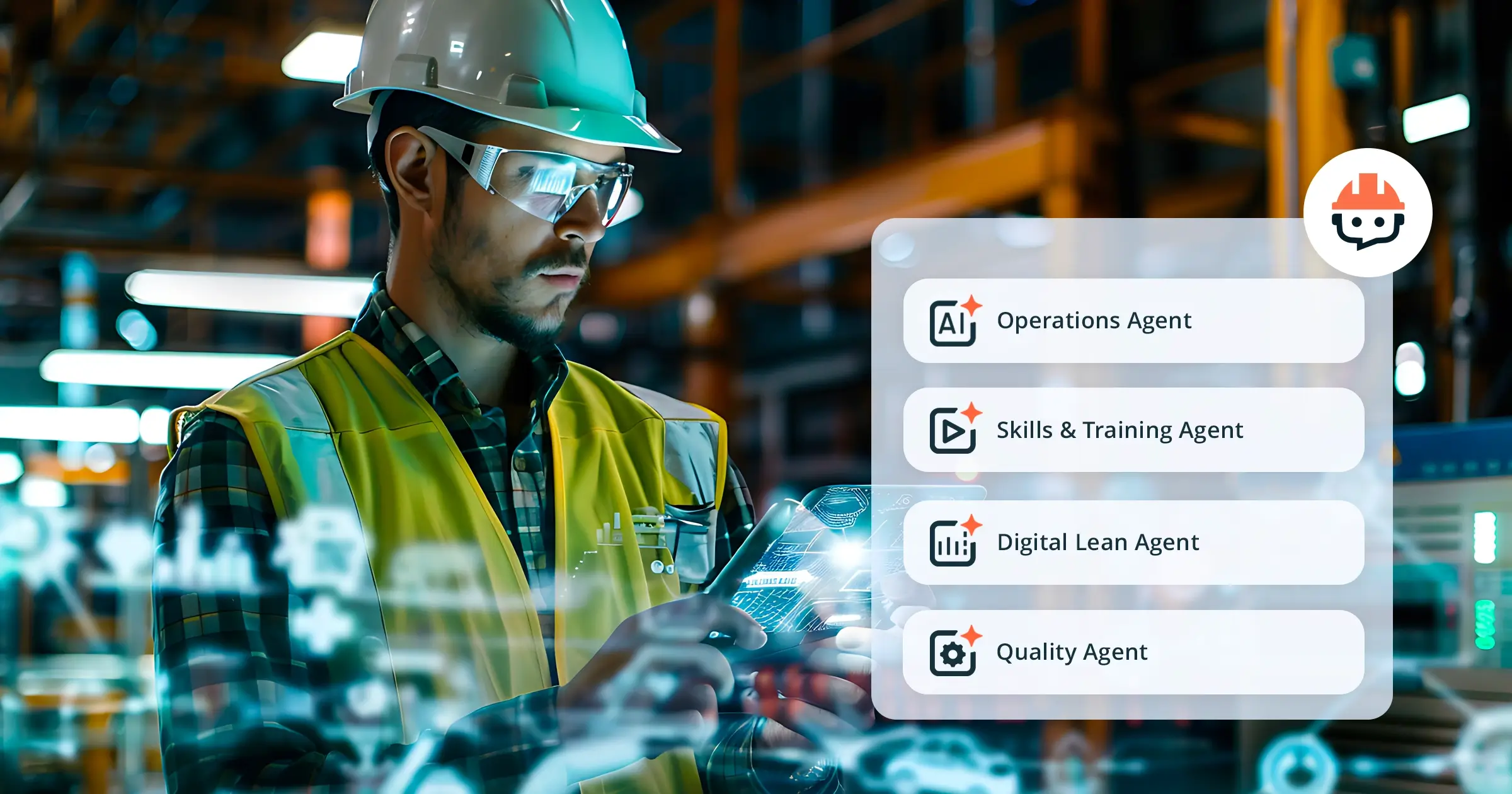
Skills & Training AI Agent – On-demand learning and certification
Operations Agent – Real-time troubleshooting support
Corporate Knowledge Graphs – Smarter access to institutional knowledge
Case studies from leading packaging and beverage companies added real-world credibility, demonstrating how organizations are scaling faster while minimizing downtime and safety incidents.
Video Recording
Full Transcript
My name is Chris Kuntz. I’m with an AI company called Augmentir, and we provide connected worker software for frontline workers in manufacturing. Today what I’ll be talking about is artificial intelligence, which in many ways has taken over the media, and become a major part of our lives, but I want to talk about it in the context of manufacturing and specifically talk about generative AI assistants and AI agents that can be used in manufacturing to help guide and support today’s frontline workers.
So just a quick 30 seconds on Augmentir and who we are as a company. We’re a relatively young company, founded in 2018, but we have a pretty deep history in innovative software and manufacturing, dating back to the late 1980s. The founders of Augmentir were the same industry innovators that founded Wonderware in 1987, which revolutionized HMI software in factories. Wonderware went public and is now part of AVEVA/Schneider Electric. We were the founders of Lighthammer, which is now part of SAP’s MII offering. And we were the founders of ThingWorx, which is now part of PTC and revolutionized the Industrial Internet of Things space. And when we left PTC, the team got back together again and we wanted to focus on tackling what we considered to be the next big problem in manufacturing at the time, which was the human worker.
If you think about AI and how it’s been, automation and how AI has optimized production lines, really the last mile for driving efficiency in manufacturing is the human worker. And even more apparent over the past five years since the pandemic, the labor shortage, the skilled labor shortage has created dramatic impacts on product quality, product efficiency, and overall throughput in manufacturing. And so our goal at Augmentir was to tackle that.
So let’s start this conversation by talking about AI and the history of AI in manufacturing. And it dates back to the 1960s. AI has been used in automation in manufacturing for decades now. It’s been used to drive incredible levels of efficiency. It’s been used in machine vision systems for quality improvements. And you see that you, when you walk around, manufacturing trade shows like this, it’s been used in warehouse in warehousing automation, and more recently, it’s been used in the industrial internet of things, digitally connecting equipment and using AI to analyze the data that is coming off of that equipment to drive greater efficiencies in production, production efficiency in manufacturing. But a common theme across all of this is up to this point, AI has been used to replace the human worker or to optimize manual labor or manual efforts that humans were doing in factories, previously. AI has a unique opportunity, specifically around generative AI co-pilots, if you think ChatGPT or AI agents, is to augment the human worker, not replace them.
And so the question we asked ourselves at Augmentir, when we started, was, can AI do the same for humans? Can AI drive efficiency for the humans that are still on the shop floor in manufacturing, quality, engineering, and maintenance roles and in equipment operation. More importantly, in maintenance, can AI be used to optimize the work that they’re doing? And why now?Here are some statistics from a report that LNS Research, an analyst firm based out of Boston ran last year on the future of industrial work. Pretty fascinating statistics. When they look at the average tenure rate in manufacturing, 2019 compared to the end of last year. So from 20 years to three years, the average time and position went down from seven years to nine months, and the average three-month retention rate, the rate at which people stay in after the first three months, from 90% down to 50%. So the problem you have in manufacturing today is yes, there’s a labor shortage, yes, it is difficult to find skilled labor, but because humans are required in manufacturing, what organizations are doing is hiring less skilled workers. And now you have a problem that’s really twofold on the shop floor. You have less experienced workers that also have less experience or less skilled workers, also have less experience. And that results in safety issues, quality issues, product recalls, downtime, everything possible that you can imagine that relates to human error in or on a factory floor.
In this survey, from LNS, the respondents, 92% of them said they were looking at technology as a way to offset that skilled labor gap. Now, it’s not the only solution, certainly there are better hiring strategies, better training strategies, but certainly looking at technology as a big piece of offsetting that labor crisis. Just another statistic here from a study in Deloitte, even if every skilled worker, and this is just in America, even if every skilled worker was employed, there would still be a 35% gap in unfilled job openings in manufacturing. That’s how bad it is. And so Deloitte predicts by 2030, that it’s a $1 trillion problem in the US alone. And I think they forecasted $3 trillion globally, a problem that exists for production output and manufacturing.
So that brings us to what we’re talking about here today, AI agents and co-pilots. Everyone here has used ChatGPT or Gemini or Perplexity or whatever, chatbot you want to use today, fantastic results and fantastic opportunities when you think about consumer AI, but what I want to do is talk about the context of AI assistance, as well as agents, which there’s some blurring of the line there, but we’ll talk about that, and their applicability in industrial operations and why it’s quite a bit different from consumer AI.
So what is an AI co-pilot? Best example is ChatGPT, right? We’ve all used it. Natural language interface, the ability to use what they call a large language model, LLM, for those of you that might not be as technical, which has the ability for that agent or that assistant to understand vast amounts of data and it provides context assistance to users. On the flip side, what is an agent? An agent is an AI bot that acts more autonomously. They can operate based on a prompt like you would have with ChatGPT, but they don’t have to. So they can actually take autonomous action based on instructions you give it. Now, when you think about it, I’m going to use ChatGPT as an example today because I think we’ve all probably used it or used something similar. They’re starting to blur the lines a little bit with their, I think they’re calling it the ChatGPT operator, so that’s starting to blur the lines between autonomous and strictly prompt-based AI. But the idea is the same in the context of today, what we’re talking about in terms of an AI co-pilot or an assistant that is a prompt-based bot that that a user might be using. And from an agent standpoint, it is something that can act more autonomously. And a prerequisite to all this, when you think about manufacturing and you think about frontline workers, whether they are working in safety, quality, equipment and machine maintenance and repair or equipment operation, a prerequisite to all this is the ability to have a connected worker.
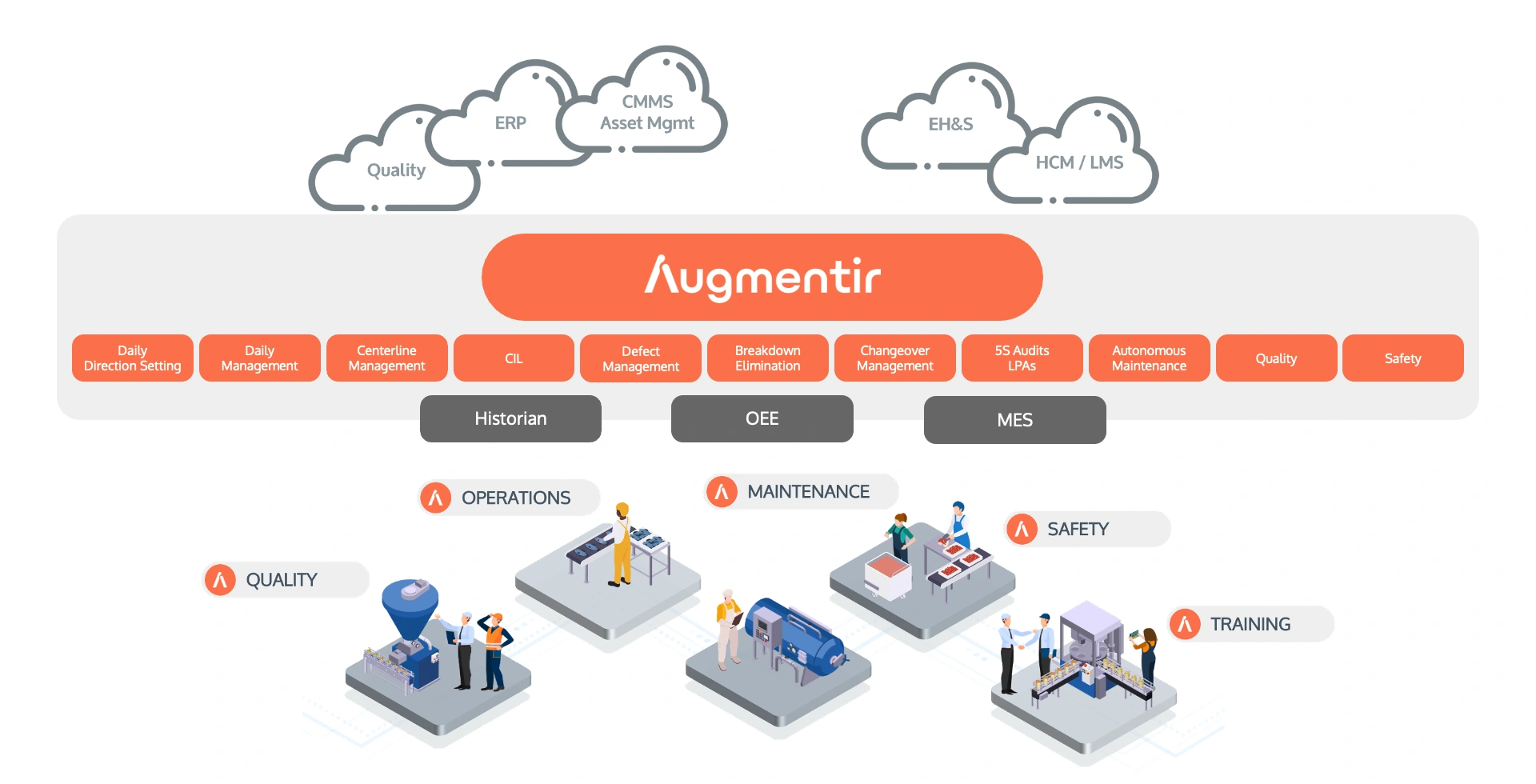
And by connected worker, what we like to talk about at Augmentir is a worker that is not only connected with a digital or a mobile tool, like a phone, a tablet, a wearable technology, a wearable augmented reality-based headset, for example, but also digitally connected into the business. So using that interface to not just connect them physically with a device, but connect them into HR systems, learning management systems, ERP systems, quality systems, and safety systems, systems that they use every day. But now that they’re connected, they can become human sensors on the shop floor. And there’s a vast amount of data that we can then capitalize on here, and AI can then act on.
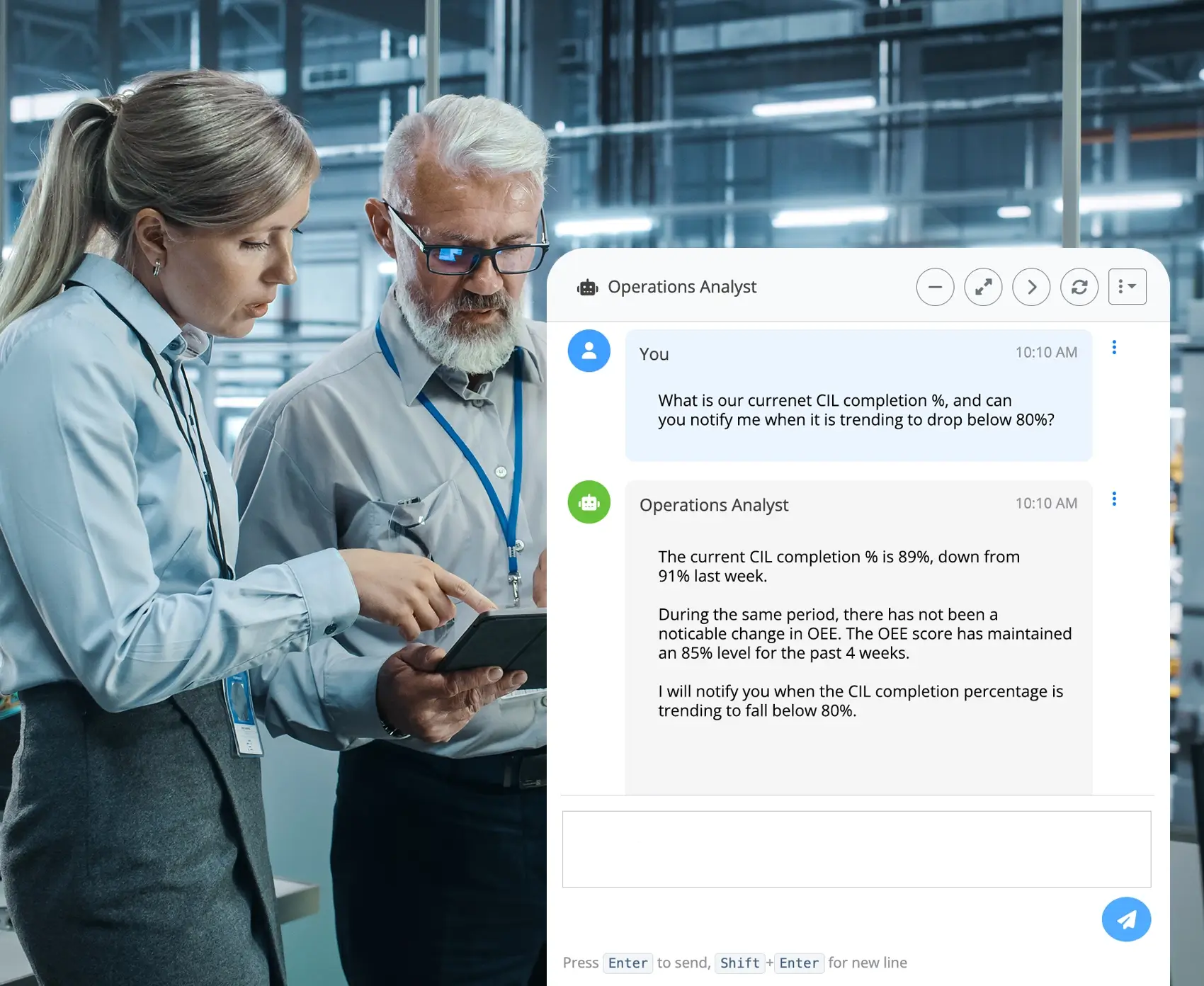
So what I want to do now is talk about consumer AI, again, the example of ChatGPT compared to industrial AI. And in the case of today, I’m going to give some examples of manufacturing companies that are actually using this technology today. But when you think about industrial operations, you have to think quite a bit differently than how we might use Gemini or ChatGPT today. So I’m just going to walk through an example here. You have a frontline worker, an operator on a manufacturing floor, and their job every day is to operate the mixer. Okay? Part of their job is also to periodically do a clean, inspect, and lubricate on that piece of equipment, so it doesn’t go down or so that they can prevent failures from happening. So that’s a CIL. So now go back to the context that I started this conversation with. Let’s say you have a less experienced worker, maybe they are a novice worker.
https://www.augmentir.com/wp-content/uploads/2025/08/mdm-east-2025-chris-kuntz-speaker.webp6301200Chris Kuntzhttps://www.augmentir.com/wp-content/uploads/2021/09/Augmentir_Logo_Sm-300x169.pngChris Kuntz2025-06-11 10:50:362025-08-11 10:50:59AI Copilots and AI Agents in Manufacturing – Chris Kuntz at MD&M East 2025
Discover how AI Factory Agents from Augmentir are transforming manufacturing with real-time insights, automation, and workforce augmentation.
Last Updated:
In the evolving landscape of Industry 4.0, popularized by Klaus Schwab, and now Industry 5.0, manufacturers are under increasing pressure to become more agile, resilient, and efficient. Amid labor shortages, shifting customer expectations, and digital disruption, one of the most transformative tools emerging is Factory Agents: smart, context-aware AI agents capable of autonomously performing tasks, surfacing insights, and augmenting human decision-making.
What are Factory Agents?
Factory agents are not physical robots, nor are they just software scripts. They’re intelligent, digital entities — powered by AI — that act on behalf of manufacturing teams to interpret data, automate actions, and optimize workflows. They serve as proactive copilots on the shop floor, embedded into the frontline work environment, continuously learning from human activity and contextual factory data to provide real-time support and operational insights.
These agents can assist with:
Recommending optimized workflows
Identifying skill gaps or training needs for frontline workers
Monitoring process performance and flagging anomalies
Automatically capturing tribal knowledge
Personalizing work instructions based on the worker’s experience and certification level
In short, factory agents bridge the gap between human intelligence and machine efficiency on the shop floor — and Augmentir is leading the charge.
Augmentir’s AI Agent Studio: Manufacturing Intelligence Made Easy
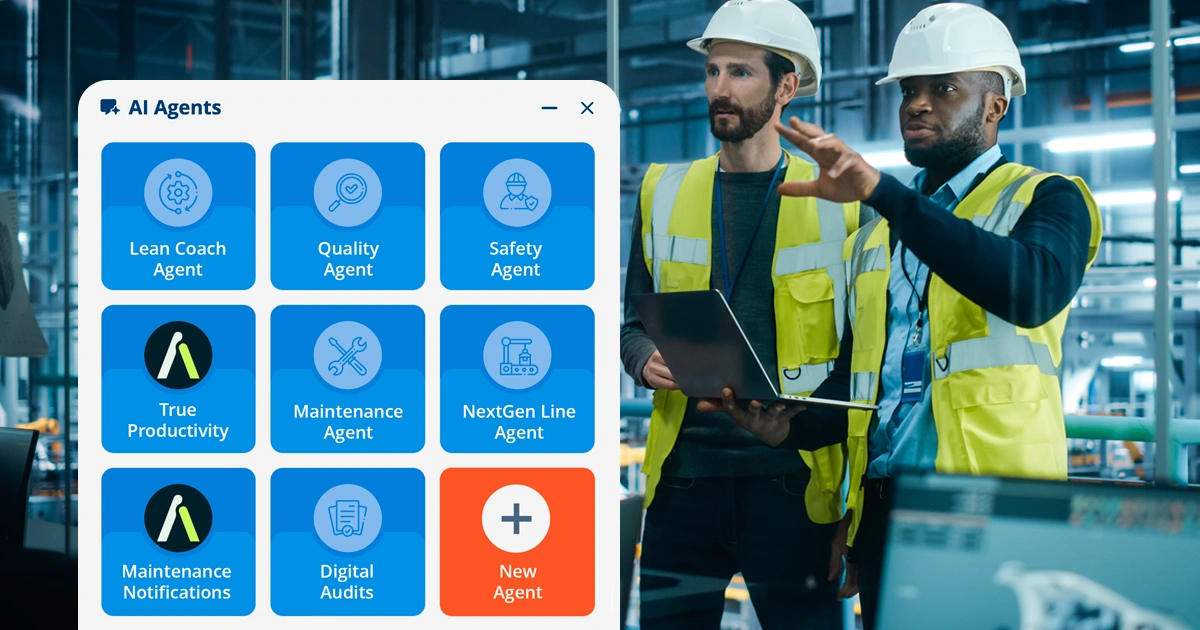
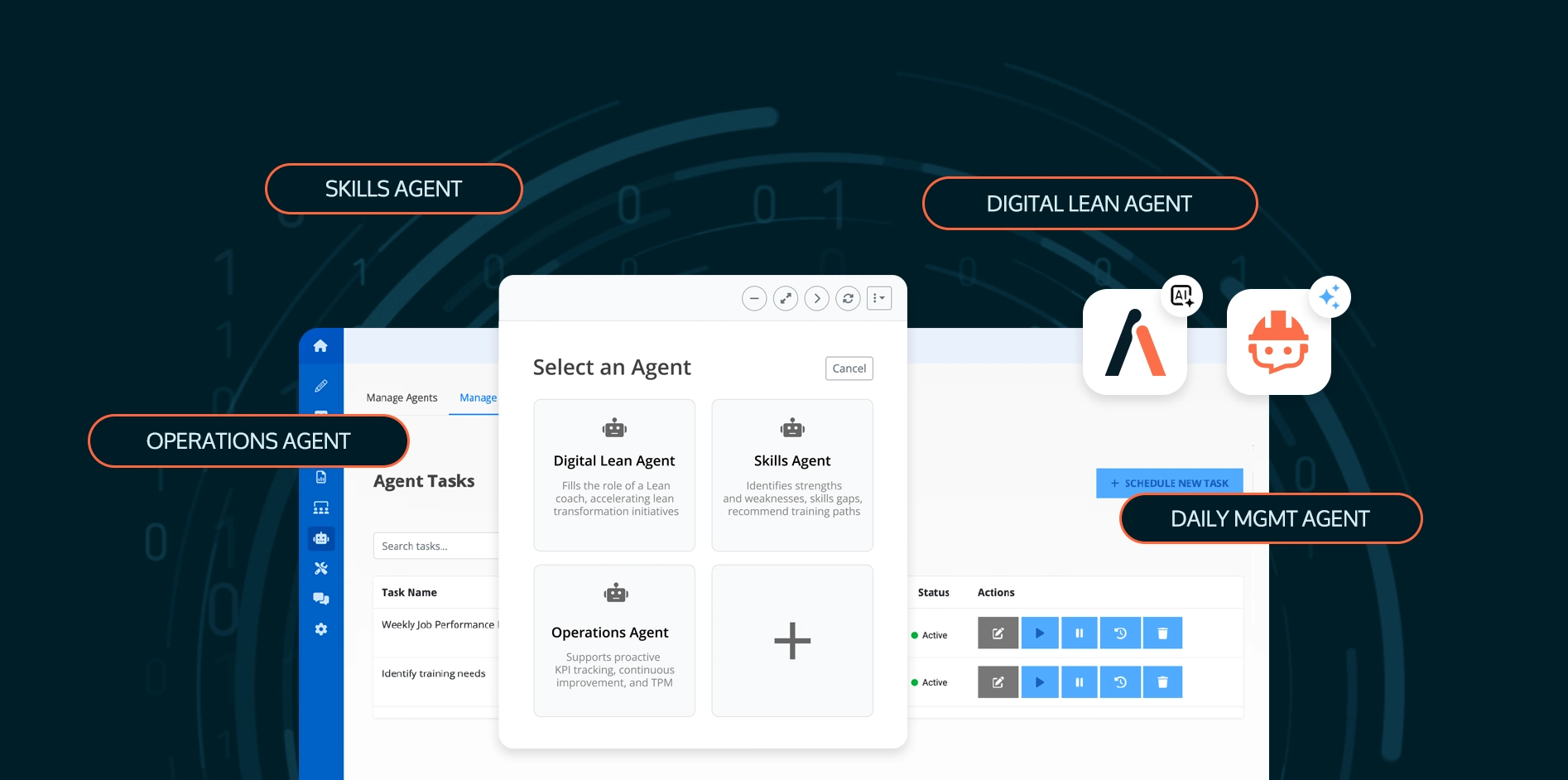
While agentic AI the concept of AI agents has existed in other sectors, Augmentir is the first to bring a no-code Industrial AI Agent Studio purpose-built for manufacturing. This unique platform allows operations leaders, supervisors, and even non-technical users to create and deploy custom AI agents tailored to specific needs across:
Workforce onboarding and training
Maintenance and repair operations (MRO)
Quality assurance
Safety procedures
Performance monitoring
These agents are powered by proprietary algorithms and generative AI that continuously learn from your workforce and operations data. That means over time, the agents get smarter — making increasingly precise recommendations, automating more tasks, and reducing variability across the shop floor.
The result? An adaptive, intelligent frontline that can respond dynamically to production demands, labor variability, and skill shortages.
Meet Augie: The Face of Next-Gen Industrial AI
At the core of Augmentir’s AI capabilities is Augie — an Industrial Generative AI assistant built specifically for frontline manufacturing environments. Augie acts like a real-time guide and operational partner for shop floor workers, supervisors, and even plant managers.
Here’s what makes Augie different:
Context-aware assistance: Augie understands the unique context of your operation — such as a specific piece of equipment, a shift schedule, or a worker’s skill level — to tailor guidance appropriately.
Conversational interface: Workers can interact with Augie naturally through chat, enabling real-time Q&A, issue resolution, or step-by-step guidance.
Continuous learning: As workers interact with Augie, it learns and improves, capturing undocumented knowledge and institutionalizing best practices across the organization.
Rather than replacing workers, Augie amplifies their capabilities, making everyone on the shop floor more confident, capable, and productive.
Real-World Impact: Augmentir in Action
Companies using Augmentir have reported measurable improvements across multiple KPIs:
20–40% reduction in training time by personalizing learning to individual skill levels
30% improvement in first-time quality through smarter digital work instructions
25% gain in workforce productivity due to real-time guidance and fewer delays
Stronger worker retention through empowered learning and growth pathways
In a time when manufacturers are grappling with a skills gap, labor shortages, and increased demand for agility, these outcomes are game-changers.
Why Factory Agents Are Defining the Future of Industrial Work
The traditional shop floor has been defined by rigid systems and static processes. But today’s manufacturers need more flexibility — they need systems that adapt to shifting demand, dynamic labor pools, and constant process change.
AI factory agents offer this adaptability and with Augmentir’s Industrial AI platform, manufacturers can unlock this potential without a massive overhaul or technical burden.
Factory agents represent a new class of industrial tools — intelligent, autonomous, and human-centric. As the first platform to bring this vision to life, Augmentir is not just building tools, but reshaping how manufacturing work gets done.
With Augie and the AI Agent Studio, Augmentir is helping manufacturers step into a new era of operational excellence — where the frontline is not just automated, but truly augmented.
Learn more about how Augmentir’s AI shop floor agents can modernize your operations – contact us today for a live demo.
https://www.augmentir.com/wp-content/uploads/2025/05/factory-agents-ai-in-manufacturing.webp6301200Chris Kuntzhttps://www.augmentir.com/wp-content/uploads/2021/09/Augmentir_Logo_Sm-300x169.pngChris Kuntz2025-05-31 11:40:432025-06-10 16:00:11Factory Agents: The Next Evolution in Manufacturing, Powered by Augmentir